
Cloud Gaming vs HTML5 Games: What ISPs Should Offer
What changes between playing in the cloud and playing in the browser: required bandwidth, device, cost and audience, and when each one makes sense for an ISP.
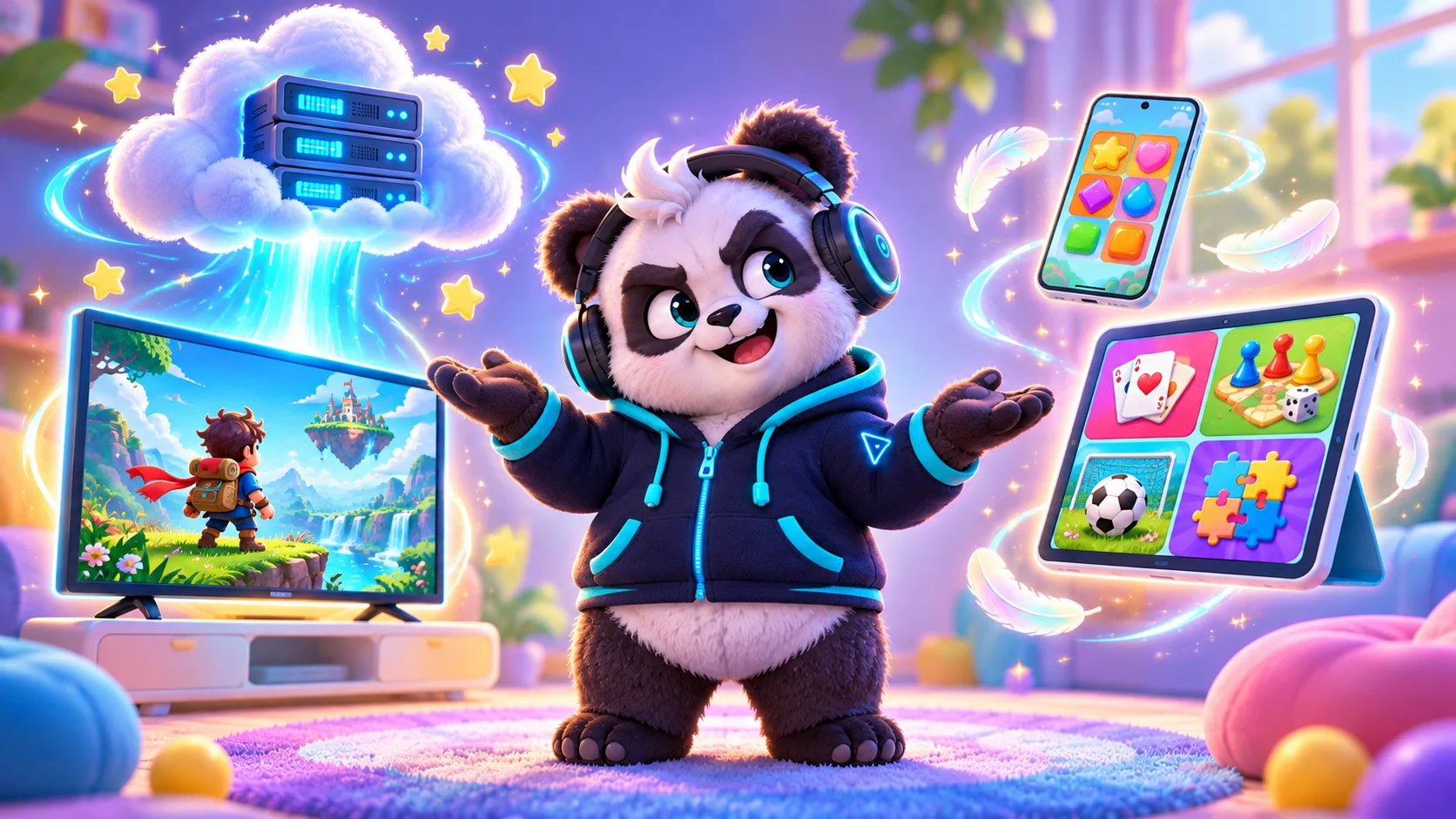
Cloud games and HTML5 games run in different places. In cloud gaming, the game runs on a server and reaches the subscriber as video, while the controls travel back over the internet. In an HTML5 game, the game files are downloaded at the start and the match runs in the device's own browser.
For an internet service provider, that difference decides almost everything: how much bandwidth the subscriber needs, what device they need to own, what it costs to offer, and who the service is right for. This guide compares the two models side by side.
Short answer
- Cloud gaming: big titles on any screen, but it needs a fast, stable, low-latency connection and is usually sold as a monthly subscription.
- HTML5 games: lightweight casual games that run in any browser, even on basic plans, and can be licensed once and hosted by the provider.
- The two can coexist: one serves heavy gamers, the other serves the whole family.
How cloud gaming works
In cloud gaming, the processing happens in a data center. The subscriber's device receives a video stream of the game and sends back every tap or button press. That is why quality depends on the connection from the start of the match to the end.
The International Telecommunication Union (ITU) notes that popular cloud gaming services need about 15 Mbit/s to play at 720p, and that delay, delay variation and packet loss also affect the experience. At higher resolutions, the requirement goes up.
Among Brazil's large carriers, trade press has reported cloud gaming services priced at R$20 to R$40 (Brazilian reais) per month to the subscriber.
How HTML5 games work
An HTML5 game is a set of files (code, images and sounds) that the browser downloads and runs. Once loaded, the match runs on the device itself, with no game server involved.
The size is small. Across six templates from our marketplace that we measured, the ready-to-host folder ranges from 8.7 MB to 53.7 MB. The subscriber downloads these files when opening the game, not throughout the whole match.
Side-by-side comparison
- Where it runs: cloud, on a server; HTML5, on the subscriber's device.
- Internet during the match: cloud, continuous and stable; HTML5, only to load the files.
- Device: cloud, any screen that can receive video, with a controller in some cases; HTML5, any phone, computer or TV with a browser.
- Type of game: cloud, big console and PC titles; HTML5, casual games (cards, words, board, sports, puzzles).
- Cost to offer: cloud, usually a monthly subscription; HTML5, can be a one-time license per game.
- Audience: cloud, heavy gamers with a strong connection; HTML5, the whole family, including basic plans and rural areas.
Which to choose for your ISP
Start with your subscriber base. If most subscribers have high-speed fiber and a young audience that plays big titles, cloud gaming for ISPs has appeal. If the base is mixed, with families, entry-level plans and small towns, casual HTML5 games reach more people and work on more devices.
Cost matters too. A monthly per-subscriber fee grows as the base grows. A one-time license per game does not grow when the base grows, and the provider can add its own brand.
See how HTML5 games work as a value-added service (called SVA in Brazil) for ISPs
How to add HTML5 games to the provider's app
The most common approach is to open the game inside the app through a built-in browser view (WebView), or on a page in the subscriber portal. The guide below covers the settings that make a difference on Android and iOS.
How to add games to your app with WebView
Frequently asked questions
Does cloud gaming need a good internet connection?
Yes. The ITU points to about 15 Mbit/s for 720p on popular services, plus low latency and little packet loss throughout the match.
Do HTML5 games work on a slow connection?
They work better than cloud gaming, because the internet is used to load the files, not during the whole match. The first load takes longer on a slow connection.
Can a provider offer both?
Yes. They serve different audiences: cloud gaming for people who play big titles, HTML5 for quick family games.
Can HTML5 games be an SVA?
Yes. SVA is the Brazilian term for a value-added service, and HTML5 games are a service delivered to the subscriber in the app or the subscriber portal. Tax treatment is up to the provider's accountant.