
Ludo rules: how to play Ludo, step by step
Four tokens, one die and a panda who has been sent back home more times than he'd like to admit.
 By Polarzinho ·

Ludo is the easiest dice board game to learn and one of the easiest to argue about. Four colours, four tokens each and one simple goal: get all your tokens to the centre before anyone else. The drama is everything in between.
I'm Polarzinho, the Polar Games panda, and I learned the rules of Ludo by playing Ludo Cats, with kittens, and Ludo Space, with a space crew. Here are the classic Ludo rules, what changes in the most common versions and the tips I wish I'd heard before my first kitten got sent back to bed.
Play Ludo Cats Play Ludo Space
The Ludo board and tokens
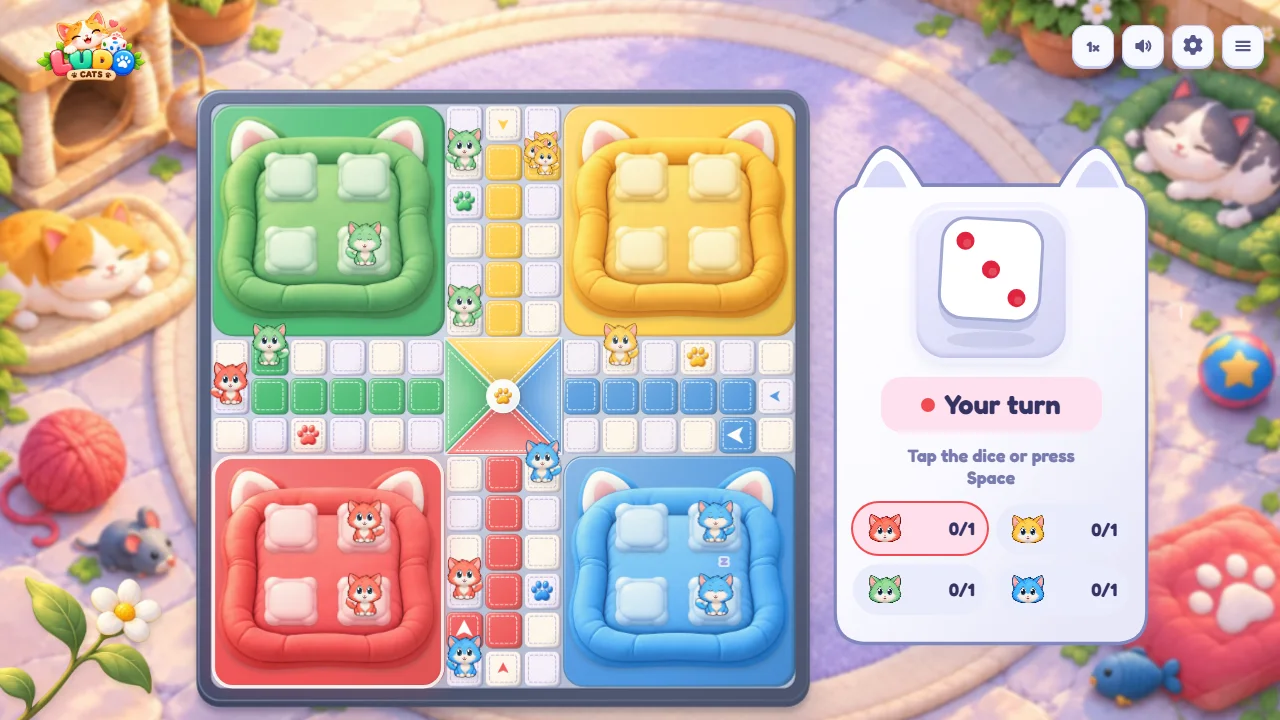
A Ludo board is shaped like a cross. In the four corners are the home bases, one per colour, where tokens wait to enter. Around them runs the shared track, and from each side a coloured column leads to the centre, the finish.
- 2 to 4 players, one colour each.
- 4 tokens per player, starting in the home base.
- 1 six-sided die.
- A shared track, one home column per colour and the centre as the finish.
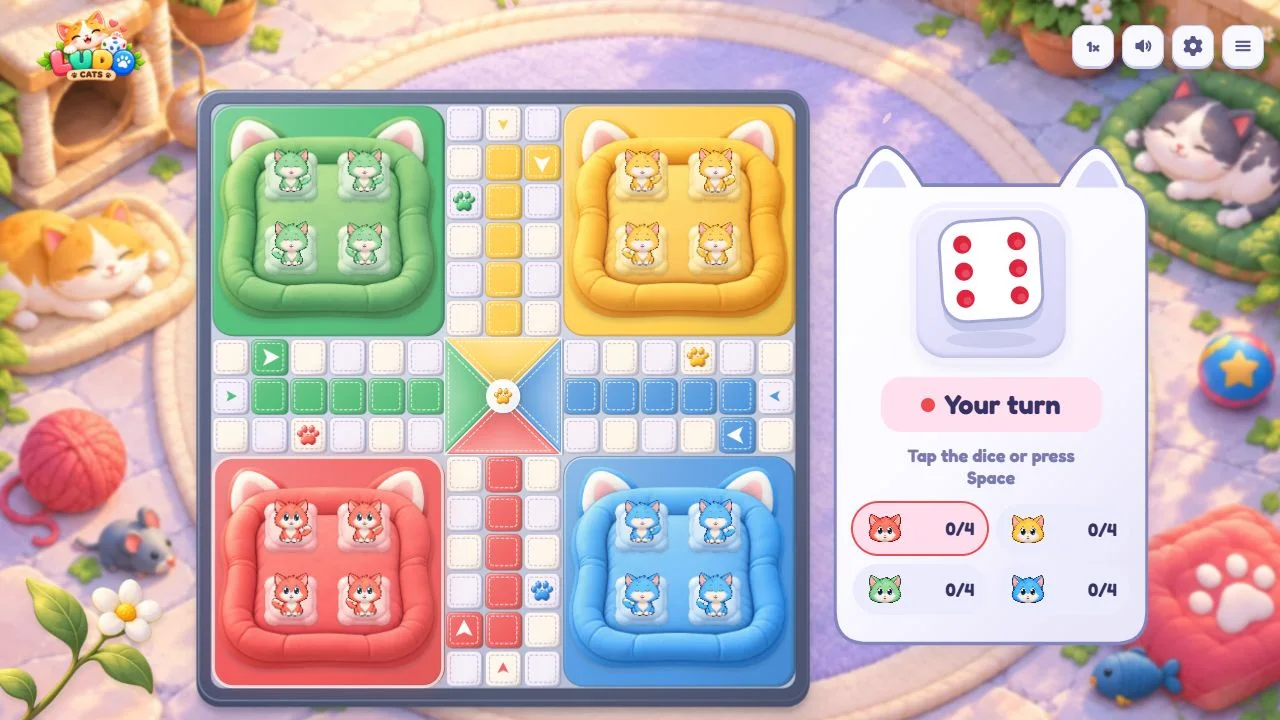
PolarzinhoI rolled a six on my very first turn and celebrated before picking a kitten. That's Ludo for you: quick joy, quick fall.
Getting started: who goes first
Each player rolls the die once and the highest roll starts. Play then moves clockwise. Plenty of families just let the youngest player go first. Agree before you start.
All tokens begin inside the home base. While they're there, nobody can touch them, but they don't move either.
Rolling a six to leave home
In classic Ludo rules, only a six brings a token out of the base. It goes onto the starting square of your colour on the track. Until you roll a six you have nothing to move, and that can take a while.
Many rule sets give an extra roll after a six, and some send a token home after three sixes in a row. These details change a lot from table to table.
In Ludo Cats and Ludo Space, Classic mode also needs a six to leave. Custom mode lets you pick: leave on a 6, on a 1 or 6, or on any roll.
Moving tokens around the board
On your turn, roll the die and move one token exactly that many squares along the track. If you have more than one token out, you choose which. If none can move, your turn passes.
A token travels the whole way round the board. When it gets back near its own colour, it leaves the shared track and enters its home column, which only your colour can use.
Capturing: sending rivals back home
If your token ends its move exactly on a square with an opponent's token, it captures it. The rival token goes back to its base and needs another six to come out. This rule is what makes Ludo so much fun and so unfair.
Many versions have safe squares, usually marked with a star or a colour, where nobody can be captured. Starting squares are often safe too.
Blocks: two tokens on one square
When two tokens of the same colour share a square, they form a block. In many rule sets neither can be captured, and in some, nobody can pass through them at all.
In Ludo Cats, two of your kittens on one square shield each other. In Custom mode the barrier option is set to Protection only: blocks protect, but they don't close the road.
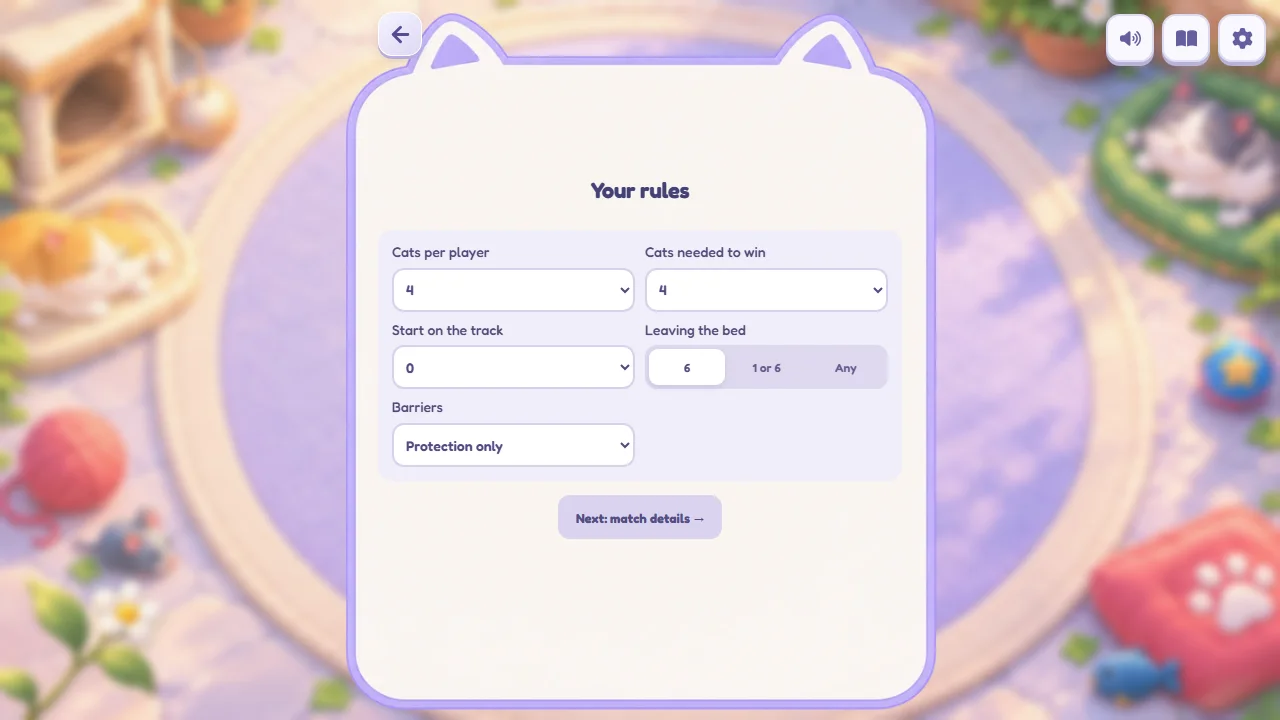
PolarzinhoFinally, house rules without the argument. Pick them, save, done. Nobody gets to say grandma played it differently.
Home column and finish: how to win at Ludo
Inside your home column nobody can capture you. Many rule sets require the exact number to reach the centre: if the roll is too high, the token stays put or bounces back the extra squares.
The first player to get all four tokens to the centre wins. With more than two players, you can keep going to decide second and third place.
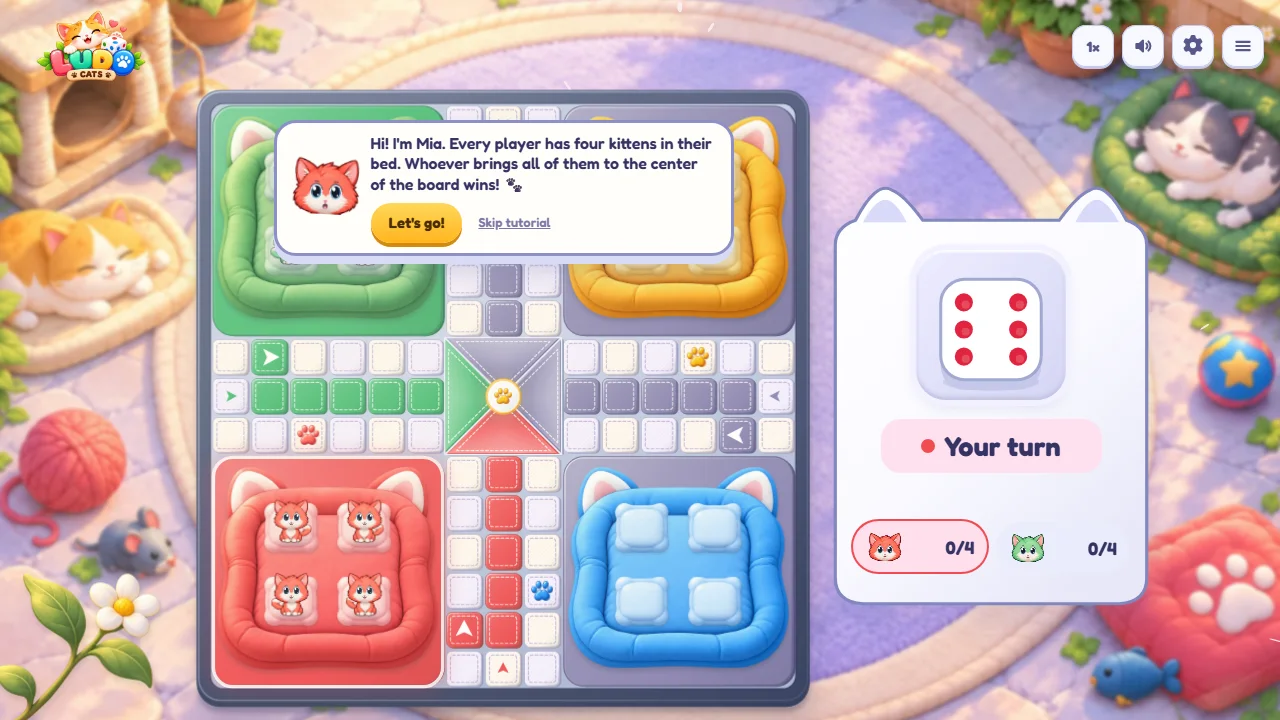
PolarzinhoMia explains the whole game in one speech bubble. It took me a full paragraph. She's a cat, I'm a panda, we all have our talents.
Team Ludo and other versions
With four players you can play in teams: colours on opposite sides form a pair and win together. Ludo Cats has this as Teams mode, with red and yellow against green and blue.
- Team Ludo: two teams of two colours; the team that brings all its tokens home first wins.
- Quick Ludo: fewer tokens, or tokens that start on the track, for short games. In Ludo Cats, Quick mode starts with two kittens on the track and ends when one reaches the centre.
- Parcheesi and Parchís: the American and Spanish cousins, with their own capture and block rules.
- Two-player Ludo: each player can use one colour or two.
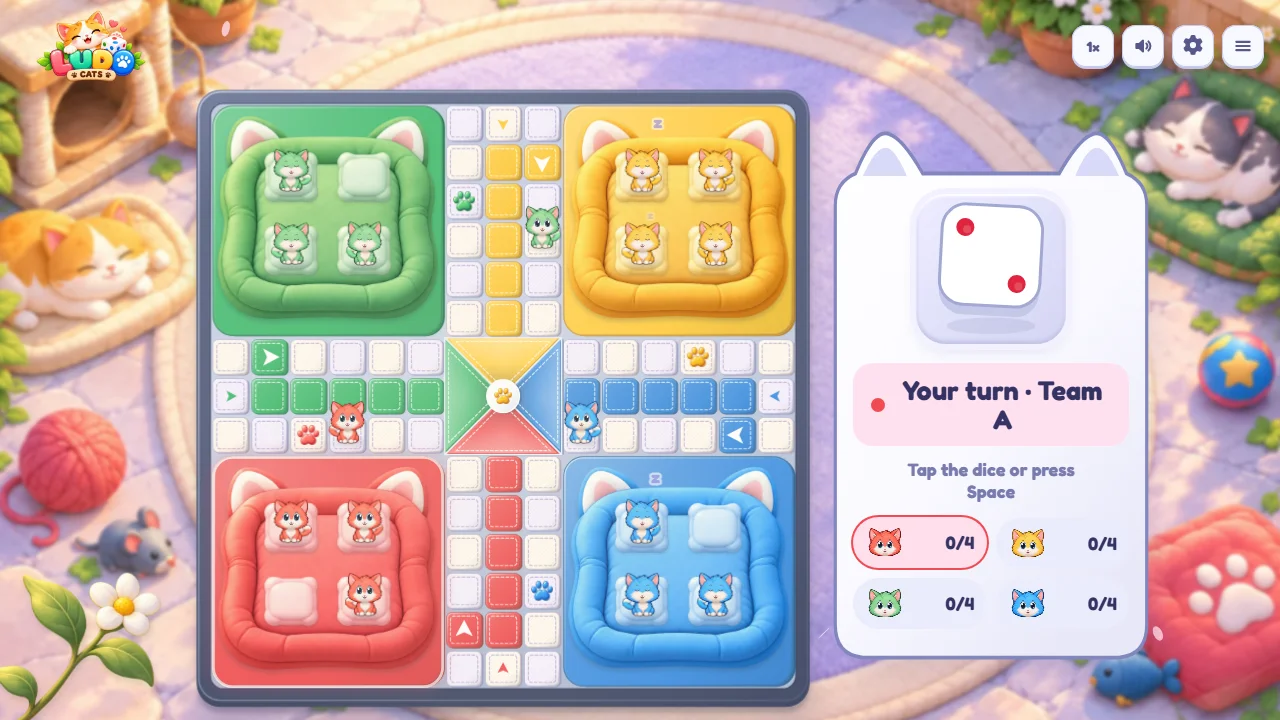
PolarzinhoI teamed up with the CPU's yellow kitten. It saved my red one twice. We're best friends now. It doesn't know that yet.
Ludo tips: how to win more games
- Get several tokens out early. With only one on the track, a bad roll freezes you.
- Avoid stopping one to six squares in front of a rival: that's exactly one roll away.
- Use safe squares and blocks to wait for the right moment.
- Capture whenever you can, especially tokens that have already travelled far.
- You're safe in your home column, so spend big rolls on tokens still on the track.
FAQ
How many tokens does each player have in Ludo?
Four tokens each, starting in the home base of their colour.
Do you need a six to start in Ludo?
In the classic rules, yes. Some versions let you leave on a 1 or 6, or on any roll.
What happens when you land on another token?
The opponent's token is captured and goes back to its base, unless it's on a safe square or part of a block.
How many people can play Ludo?
Two to four players. With four, you can also play in teams of two.
Can I play Ludo online for free?
Yes. Ludo Cats and Ludo Space run free in your browser, against the CPU or with friends taking turns on one device.
Ready to roll?
Ludo Cats is classic Ludo with kittens in a cozy garden, and Ludo Space takes the race into orbit. Both have Classic, Quick, Teams and Custom modes, for 2 to 4 players against the CPU on three levels or with friends on one device, plus a short tutorial for first-timers.
PolarzinhoIf you beat me, that's fine. I'll go back to bed, roll a six and start again. Pandas are persistent.