
Types of Rocks: Igneous, Sedimentary and Metamorphic
The three types of rocks, how each one forms, examples like granite, basalt, sandstone and marble, the rock cycle, minerals versus ores and the Mohs hardness scale.
 By Polarzinho ·

I dig a lot. In games, of course: in Deepforge, my picks smash through dirt, stone, ore and crystal. One day I stopped and wondered: what are all these rocks actually made of?
The answer fits in three words: igneous, sedimentary and metamorphic. Here is how each type forms, easy examples to spot, the rock cycle and the difference between a rock, a mineral and an ore.
Rock, mineral and ore
- Mineral: a natural solid with a definite chemical makeup. Examples: quartz, feldspar, calcite.
- Rock: a natural mix of one or more minerals. Granite, for example, combines quartz, feldspar and mica.
- Ore: a mineral or rock that is worth mining for a metal. Hematite gives iron; bauxite gives aluminum.
1. Igneous rocks
They form from magma, the melted rock inside the Earth, when it cools and hardens.
- Intrusive: they cool slowly underground and grow large crystals. Example: granite.
- Extrusive (volcanic): they cool fast at the surface after erupting as lava. Examples: basalt, pumice and obsidian.
2. Sedimentary rocks
They form from bits of other rocks, sand, mud and remains of living things that pile up in layers and, over time, get pressed and cemented together.
- Sandstone: pressed sand.
- Shale: hardened mud and clay.
- Limestone: often made from shells and skeletons of sea creatures.
- Conglomerate: rounded pebbles held in a natural "cement".
- Coal: plant remains buried for millions of years.
3. Metamorphic rocks
These are existing rocks changed by intense heat and pressure, without melting.
- Marble: comes from limestone.
- Quartzite: comes from sandstone.
- Slate: comes from shale.
- Gneiss: can come from granite.
- Schist: a rock in shiny layers, rich in mica.
The rock cycle
- Magma cools and forms igneous rocks.
- Wind, rain and rivers wear rocks down and carry the sediments away.
- Sediments pile up and become sedimentary rocks.
- Heat and pressure turn rocks into metamorphic rocks.
- Deep down, rocks can melt and become magma again.
The cycle takes millions of years, and any type of rock can become another.
The Mohs hardness scale
It ranks which mineral scratches which. Each one scratches those with lower numbers:
- Talc
- Gypsum
- Calcite
- Fluorite
- Apatite
- Orthoclase
- Quartz
- Topaz
- Corundum
- Diamond
Gemstones are minerals
- Diamond: pure carbon.
- Ruby and sapphire: the same mineral, corundum, in different colors.
- Emerald: a green variety of beryl.
- Amethyst: purple quartz.
Mining in Deepforge
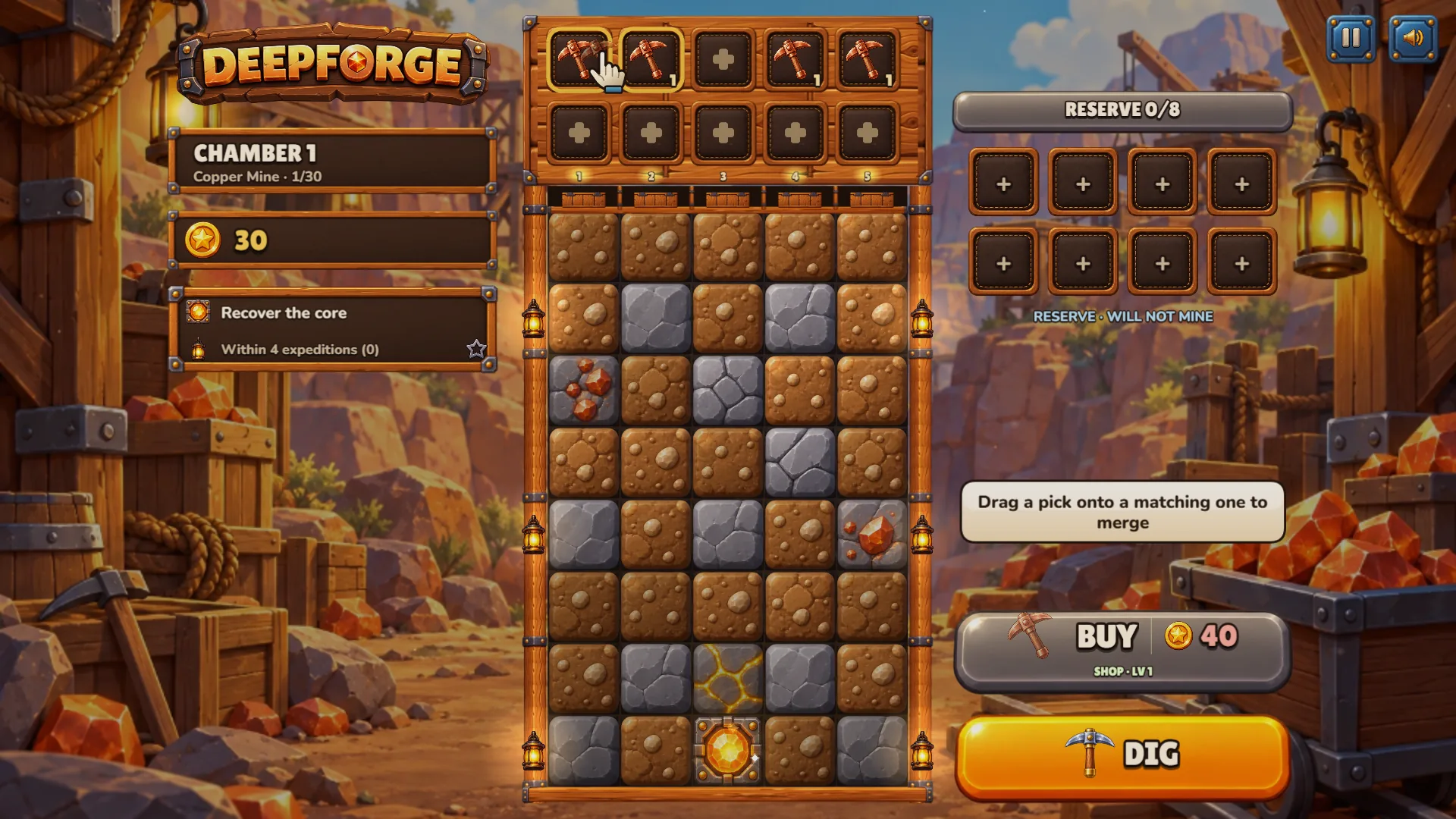
In Deepforge I merge matching picks into stronger tools and send an expedition through 30 chambers in six biomes. It all starts in a copper mine, with dirt and stone.
Deeper down are the Volcanic Depths, with flowing lava and gold veins in dark stone. Cooling lava is exactly how an igneous rock is born.
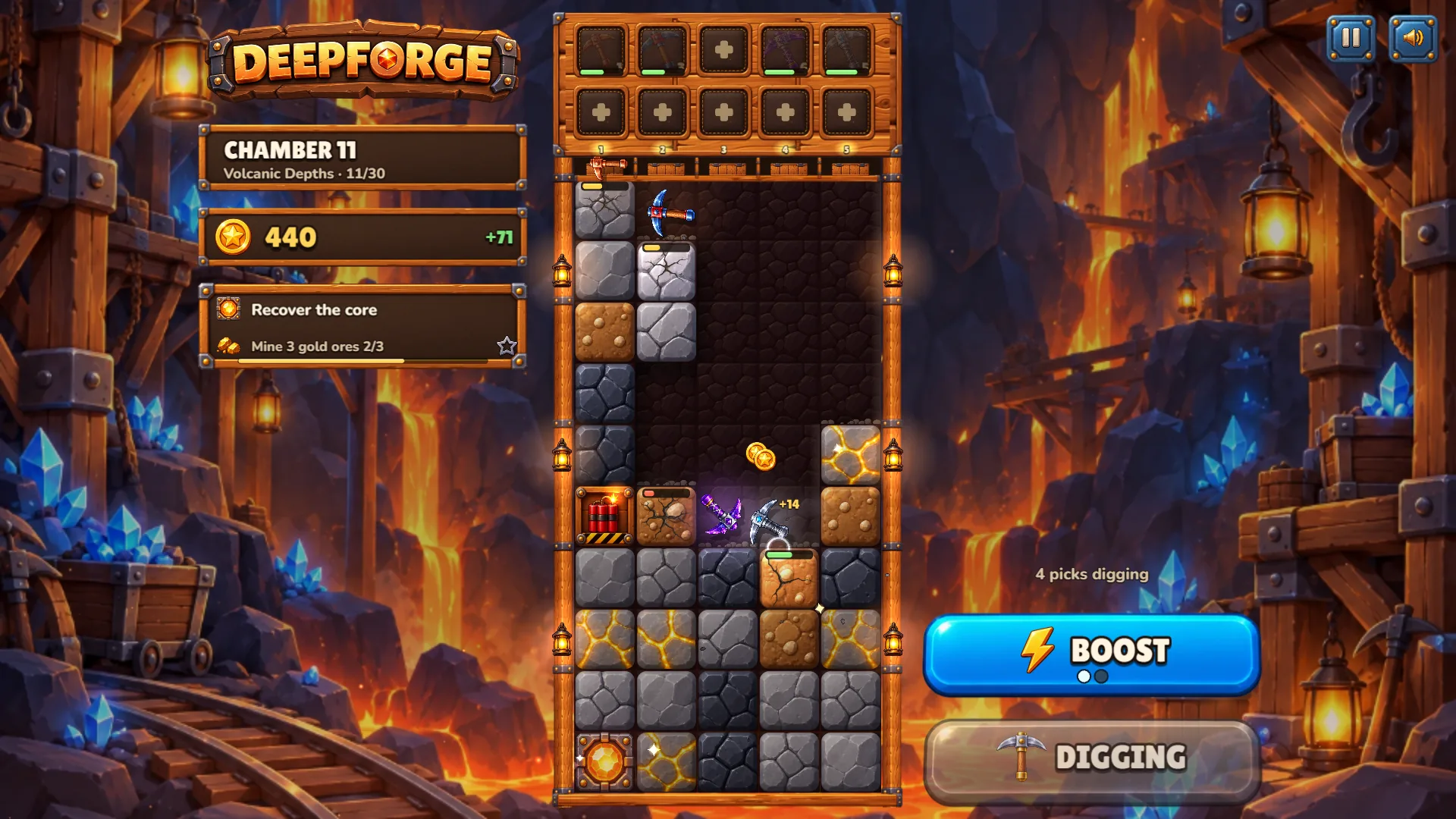
PolarzinhoGold in volcanic rock. Pick ready.
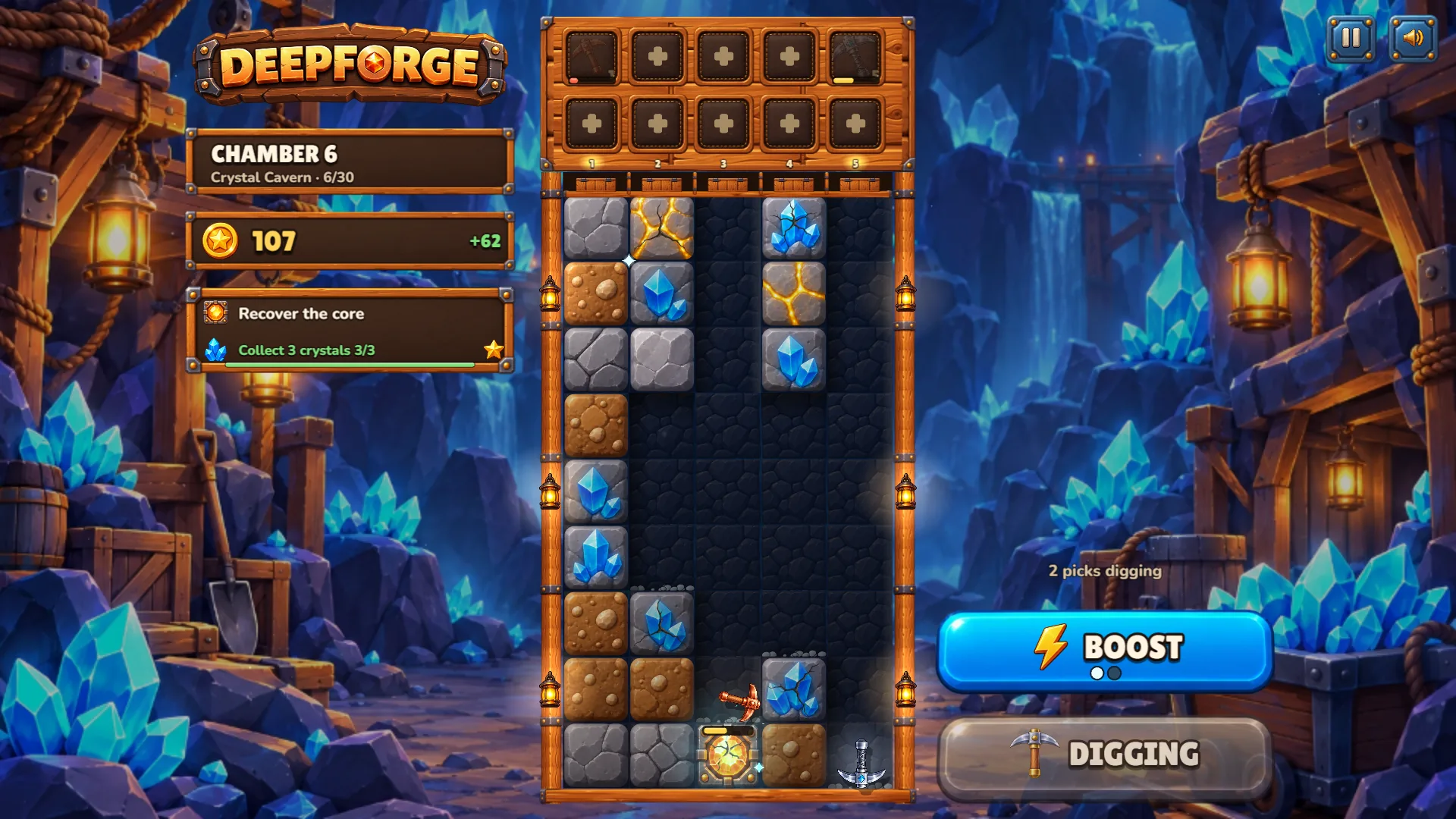
And there is the Crystal Cavern, where one of the goals is to collect crystals on the way to the core.
FAQ
What are the 3 types of rocks?
Igneous, sedimentary and metamorphic.
What type of rock is granite?
Intrusive igneous: it cooled slowly inside the Earth.
What type of rock is marble?
Metamorphic: it is limestone changed by heat and pressure.
What is the difference between a rock and a mineral?
A mineral has a definite chemical makeup; a rock is a mix of one or more minerals.
Your turn
Look at the floor, the counter or the sidewalk at home. Can you spot granite, marble or slate? Each one is a different type.