
Periodic Table: Elements, Symbols and Groups
What the periodic table is, how many elements there are (118), periods and groups, the families (alkali metals, halogens, noble gases), the first 20 elements and symbols from Latin like Fe and Au.
 By Polarzinho ·
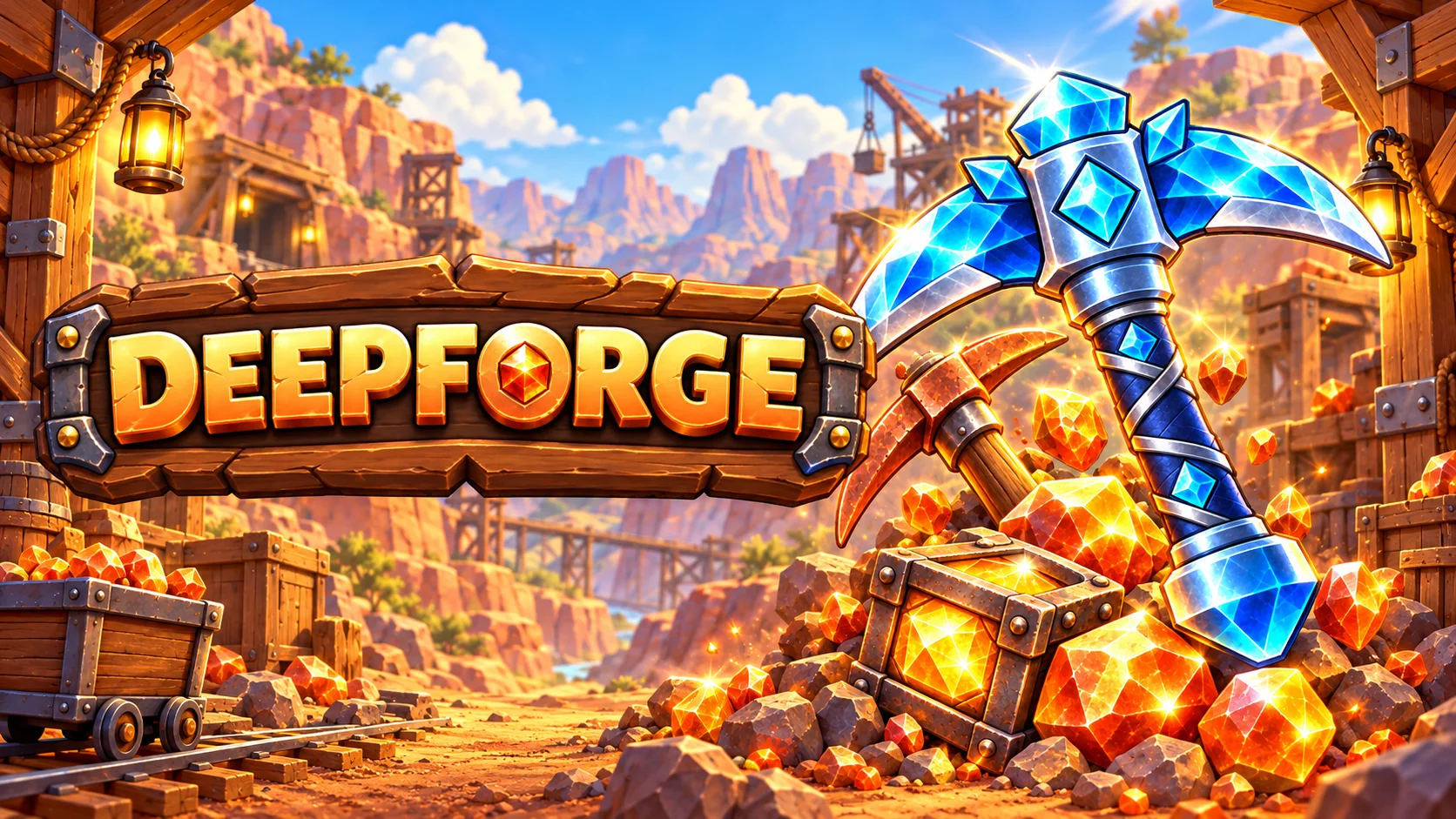
Copper, iron, gold: in Deepforge I make pickaxes out of these metals and head down a mine. All of them are on the periodic table, the map of the building blocks everything is made of.
Here you get what the periodic table is, how to read periods and groups, the main families, the first 20 elements and why gold has the symbol Au.
What is the periodic table?
The periodic table arranges all the known chemical elements, 118 in total. An element is a type of atom, like oxygen or iron. The table was published by the Russian chemist Dmitri Mendeleev in 1869 and is still used today.
How to read the table
- Atomic number: the number of protons in an atom. It sets the order: hydrogen is 1, helium is 2, and so on.
- Symbol: one or two letters. The first is always capitalized: H, He, Fe.
- Periods: the 7 horizontal rows.
- Groups (or families): the 18 vertical columns. Elements in the same group behave in similar ways.
The main families
- Alkali metals (group 1): lithium, sodium, potassium and others. Very reactive. Hydrogen sits in group 1 but is not an alkali metal.
- Alkaline earth metals (group 2): beryllium, magnesium, calcium and others.
- Halogens (group 17): fluorine, chlorine, bromine and iodine.
- Noble gases (group 18): helium, neon, argon and others. They hardly react with anything.
- Transition metals (groups 3 to 12): iron, copper, gold, silver and others.
The first 20 elements
- 1. H: hydrogen
- 2. He: helium
- 3. Li: lithium
- 4. Be: beryllium
- 5. B: boron
- 6. C: carbon
- 7. N: nitrogen
- 8. O: oxygen
- 9. F: fluorine
- 10. Ne: neon
- 11. Na: sodium
- 12. Mg: magnesium
- 13. Al: aluminum
- 14. Si: silicon
- 15. P: phosphorus
- 16. S: sulfur
- 17. Cl: chlorine
- 18. Ar: argon
- 19. K: potassium
- 20. Ca: calcium
Symbols that come from Latin
Some symbols do not look like the English name because they come from the Latin name:
- Fe (iron, no. 26): from Latin ferrum
- Au (gold, no. 79): from Latin aurum
- Ag (silver, no. 47): from Latin argentum
- Cu (copper, no. 29): from Latin cuprum
- Pb (lead, no. 82): from Latin plumbum
- Sn (tin, no. 50): from Latin stannum
- Hg (mercury, no. 80): from Latin hydrargyrum
- Na (sodium, no. 11): from Latin natrium
- K (potassium, no. 19): from Latin kalium
Metals, nonmetals and metalloids
- Metals: shiny, conduct heat and electricity and most are solid. Most of the elements.
- Nonmetals: do not conduct electricity well. Carbon, oxygen, nitrogen.
- Metalloids: in between, like silicon.
Copper, iron and gold in Deepforge
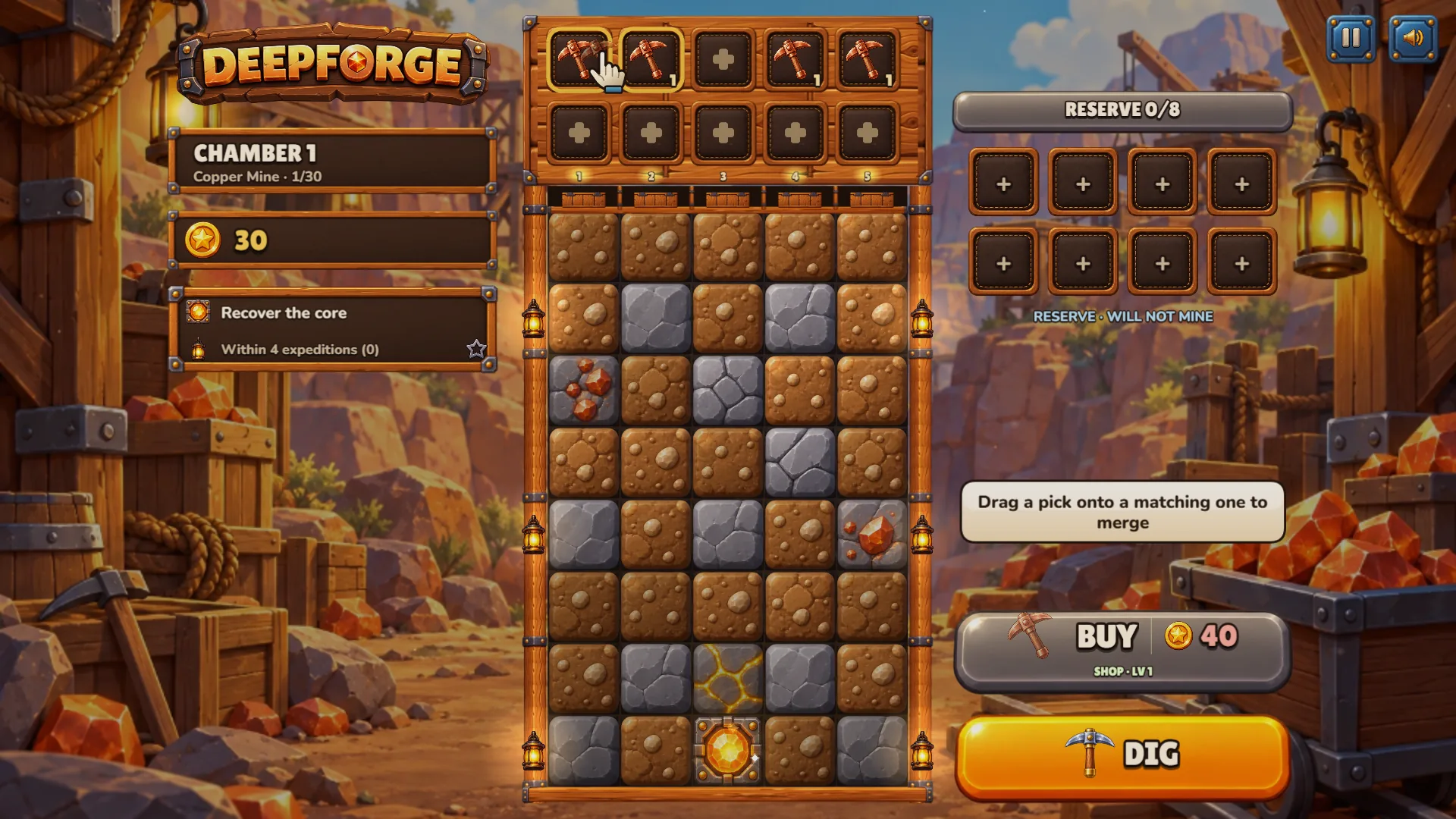
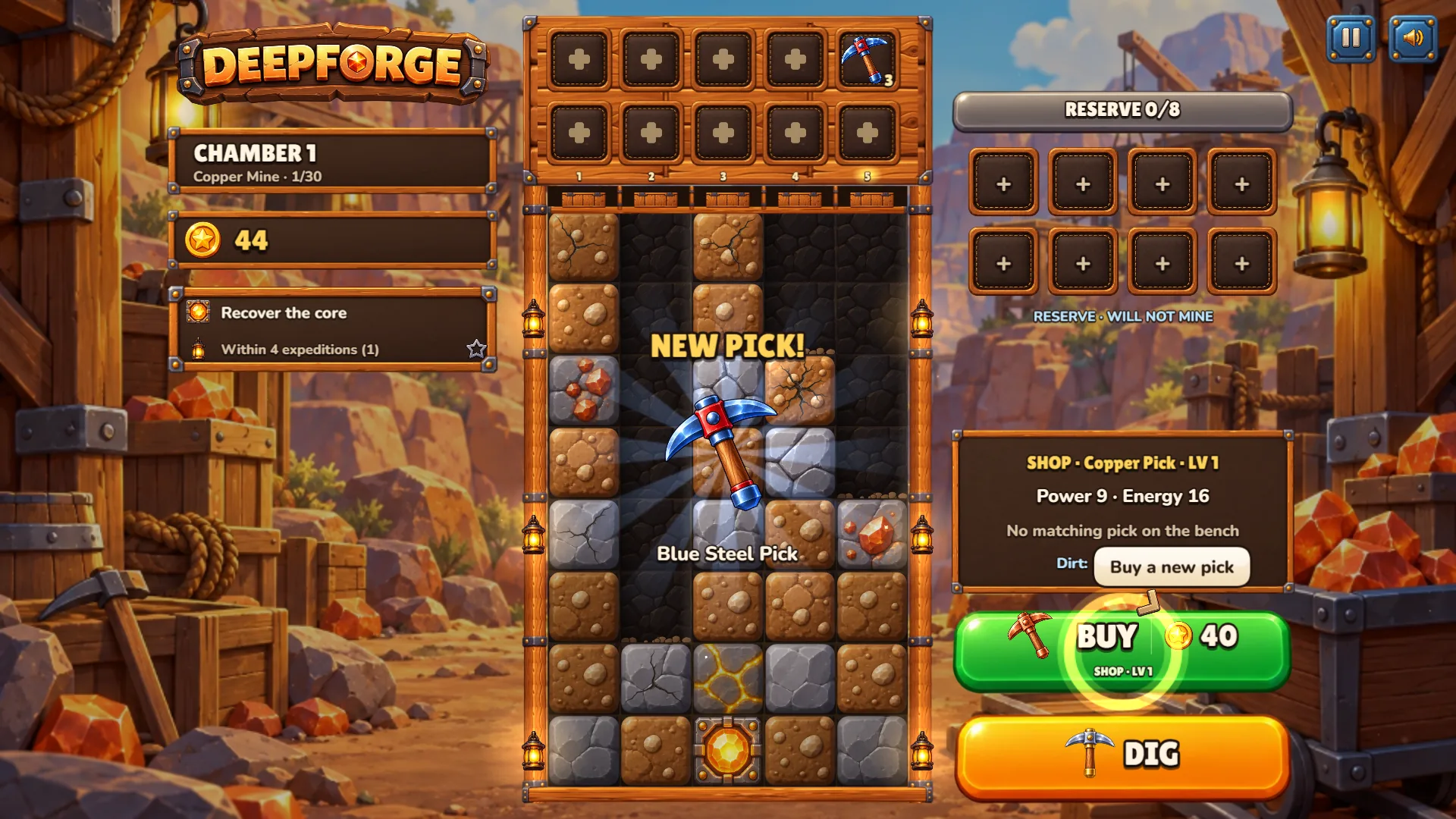
In Deepforge, everything starts in a copper mine, with dirt and stone. By merging matching picks you make stronger tools, like a Blue Steel Pick after combining two Iron Picks.
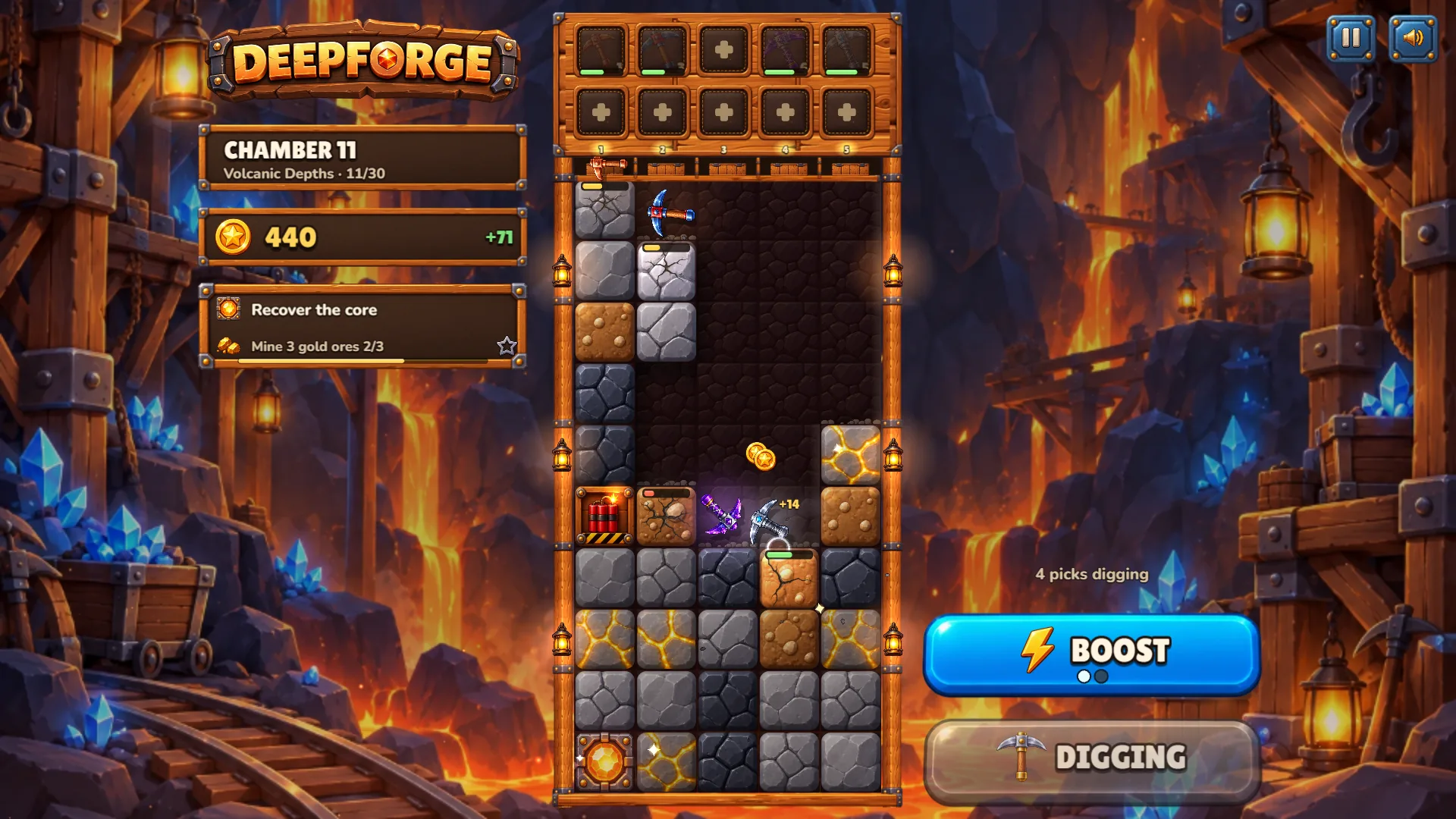
In the volcanic depths, gold veins appear.
PolarzinhoCu, Fe, Au. I am playing and memorizing the table at the same time.
FAQ
How many elements are on the periodic table?
118 elements.
Who created the periodic table?
The Russian chemist Dmitri Mendeleev, in 1869.
What is the symbol for gold?
Au, from aurum, the Latin word for gold.
What are noble gases?
The elements in group 18, like helium and neon, which hardly react.
Your turn
What is the symbol for iron, for sodium and for copper? Answers: Fe, Na and Cu.