
The Water Cycle: Stages and Simple Explanation
The water cycle in simple stages: evaporation, condensation, precipitation and collection, the three states of water, state changes and an easy experiment at home.
 By Polarzinho ·

The water I drink today was once a cloud, was once rain and was once ice on a mountain. It sounds like an exaggeration, but that is exactly what the water cycle explains: Earth's water goes round and round between sea, air and land, and never runs out.
Here you get the stages of the water cycle, the three states of water, the name of each change of state and an easy experiment to watch it happen in the kitchen.
What is the water cycle?
The water cycle (or hydrologic cycle) is the path water takes between Earth's surface and the atmosphere. It runs on energy from the Sun and has no start or end: water just changes place and state.
The stages of the water cycle
- Evaporation: the Sun heats water in seas, rivers and lakes, and it rises as invisible vapor.
- Transpiration: plants also release vapor through their leaves. Together with evaporation, it is called evapotranspiration.
- Condensation: high up the air is colder, and the vapor turns into tiny droplets that form clouds.
- Precipitation: the droplets get heavy and fall as rain, hail or snow.
- Collection and infiltration: some water runs over the surface into rivers and seas, and some soaks into the ground and refills underground water.
- And the cycle starts again.
The three states of water
- Solid: ice and snow.
- Liquid: river water and tap water.
- Gas: water vapor, which you cannot see.
Clouds and fog are not vapor: they are tiny droplets of liquid water or very small ice crystals.
Changes of state
- Melting: solid to liquid. Ice melting.
- Freezing: liquid to solid. Water turning into ice.
- Vaporization: liquid to gas. It can be evaporation (slow) or boiling (fast).
- Condensation: gas to liquid. A cold glass "sweating" on the outside.
- Sublimation: solid straight to gas, without becoming liquid. Snow disappearing in cold, dry air.
At sea level, water freezes at 0 °C (32 °F) and boils at 100 °C (212 °F).
How much water is there, and how much can we drink
- About 71% of Earth's surface is covered by water.
- Nearly all of it, around 97%, is salt water from the oceans.
- Fresh water is a small part, and a good share of it is frozen in glaciers.
Experiment: the glass that "sweats"
- Fill a glass with cold water and ice.
- Leave it on the table for about 10 minutes.
- Look at the droplets on the outside of the glass.
Those drops did not leak from the glass. They came from water vapor in the air, which cooled when it touched the cold glass and turned liquid. That is condensation happening in front of you.
Ice, clouds and sea in Puttide
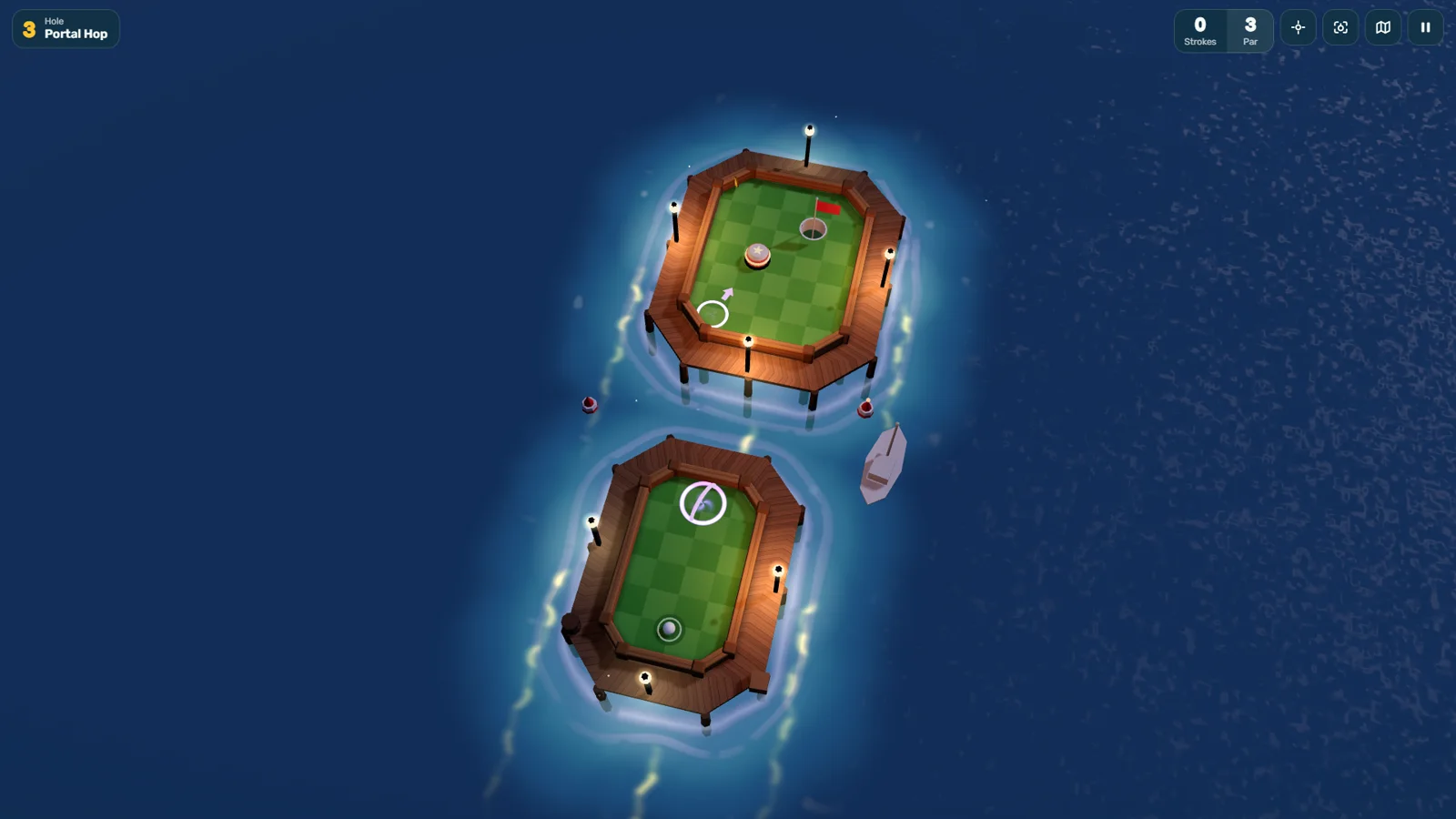
In Puttide, the 3D browser mini golf, the islands remind you of water in many states. There are courses in snow and ice, courses among the clouds and courses over the sea.
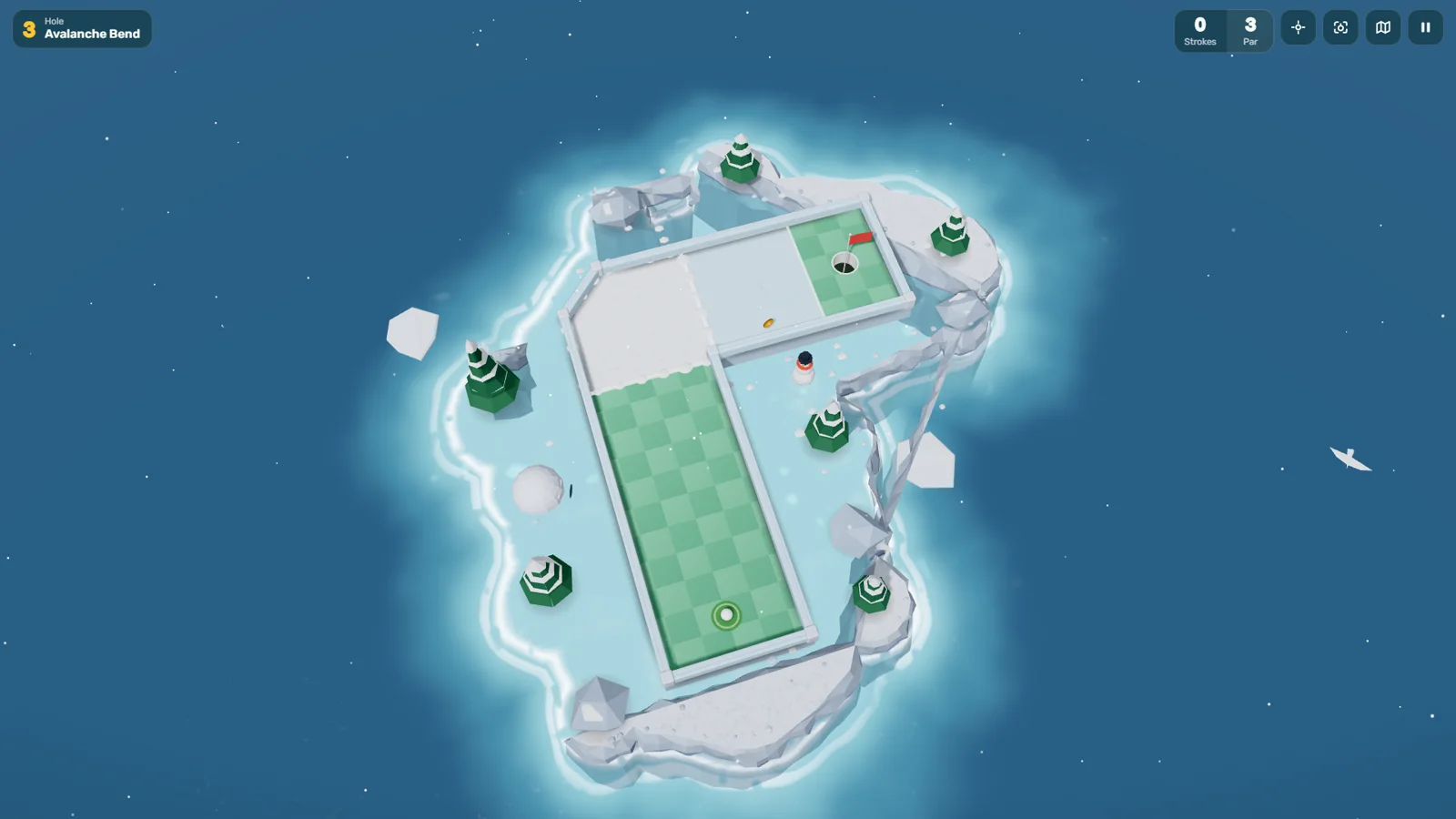
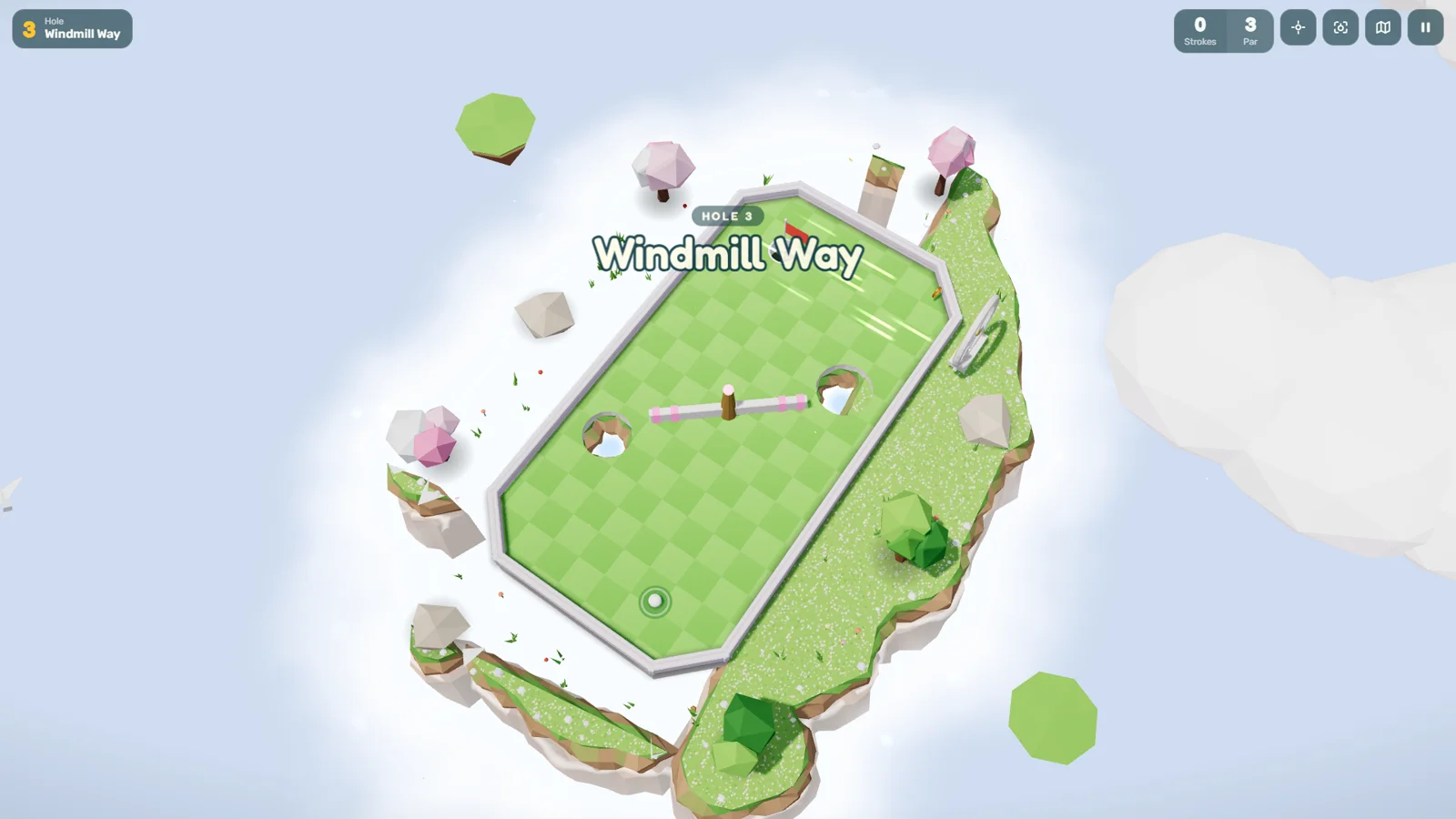
PolarzinhoIce, cloud and sea. The water cycle became a mini golf tournament.
FAQ
What are the stages of the water cycle?
Evaporation, condensation, precipitation and collection (or infiltration).
What is condensation?
It is when water vapor turns into tiny droplets of liquid water, as when clouds form.
What is precipitation?
It is water falling from clouds: rain, hail or snow.
What are the three states of water?
Solid (ice), liquid (water) and gas (vapor).
Your turn
Which stage is each one: a puddle drying up, a fogged bathroom mirror and a summer rain? Answers: evaporation, condensation and precipitation.