
Traffic Signs and Meanings: Shapes and Colors
The main types of traffic signs in the US (regulatory, warning and guide), what each shape and color means, the most common signs, traffic lights and road markings.
 By Polarzinho ·
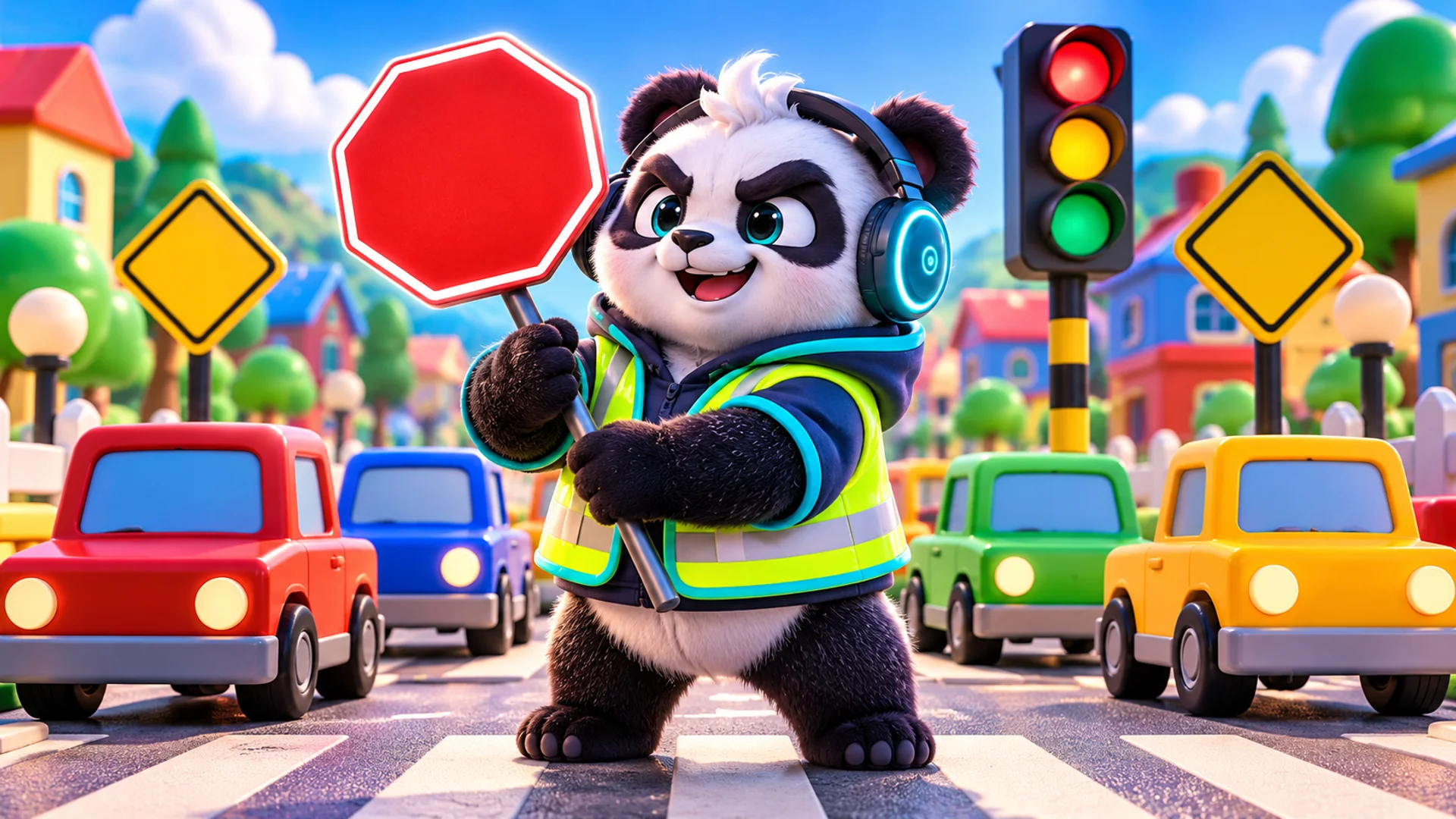
I do not have a driver's license yet (pandas cannot reach the pedals), but I can read every sign. Here is the secret: before reading the picture, look at the shape and the color. They already tell half the story.
Here you get the main types of traffic signs in the US, what each shape and color means, the most common signs, traffic lights and the lines painted on the road.
The types of traffic signs
- Regulatory: tell you what you must or must not do. Ignoring them breaks the law.
- Warning: alert you to a hazard or change in the road ahead.
- Guide: show directions, distances, services and places of interest.
There are also temporary signs for road work, and school zone signs.
What each shape means
- Octagon: only the STOP sign uses it.
- Upside-down triangle: only YIELD uses it.
- Diamond: warning signs.
- Rectangle: regulatory and guide signs, like speed limits and directions.
- Pentagon: school zone and school crossing.
- Circle: railroad crossing ahead.
- Pennant (a sideways triangle): no passing zone.
What each color means
- Red: stop, yield or not allowed.
- White with black: regulatory rules, like speed limits.
- Yellow: general warning.
- Fluorescent yellow-green: school zones, pedestrians and bikes.
- Orange: road work. These are temporary.
- Green: directions and distances.
- Blue: services, like gas, food and hospitals.
- Brown: parks, recreation and points of interest.
Common regulatory signs
- STOP: come to a full stop before going on.
- YIELD: let traffic on the other road go first.
- Speed limit: the highest legal speed, in miles per hour.
- Do not enter: you cannot drive into that road from here.
- One way: traffic moves only in the arrow's direction.
- No U-turn, no left turn, no right turn: a turning arrow inside a red circle with a slash.
Common warning signs
- Sharp curve or winding road ahead.
- Slippery when wet.
- Pedestrian crossing.
- Signal ahead.
- Deer or animal crossing.
- Lane ends or road narrows.
Traffic lights and road markings
- Red light: stop.
- Yellow light: the light is about to turn red. Stop if you can do it safely.
- Green light: go, carefully.
- Yellow lines: separate traffic going in opposite directions.
- White lines: separate lanes going the same way.
- Solid line: do not cross or pass.
- Broken line: you may pass or change lanes when it is safe.
Practicing traffic in Beep Out!
In Beep Out! you untangle a traffic jam of toy cars. Each car only drives the way it points, and little chevrons show its road, like a one-way sign.
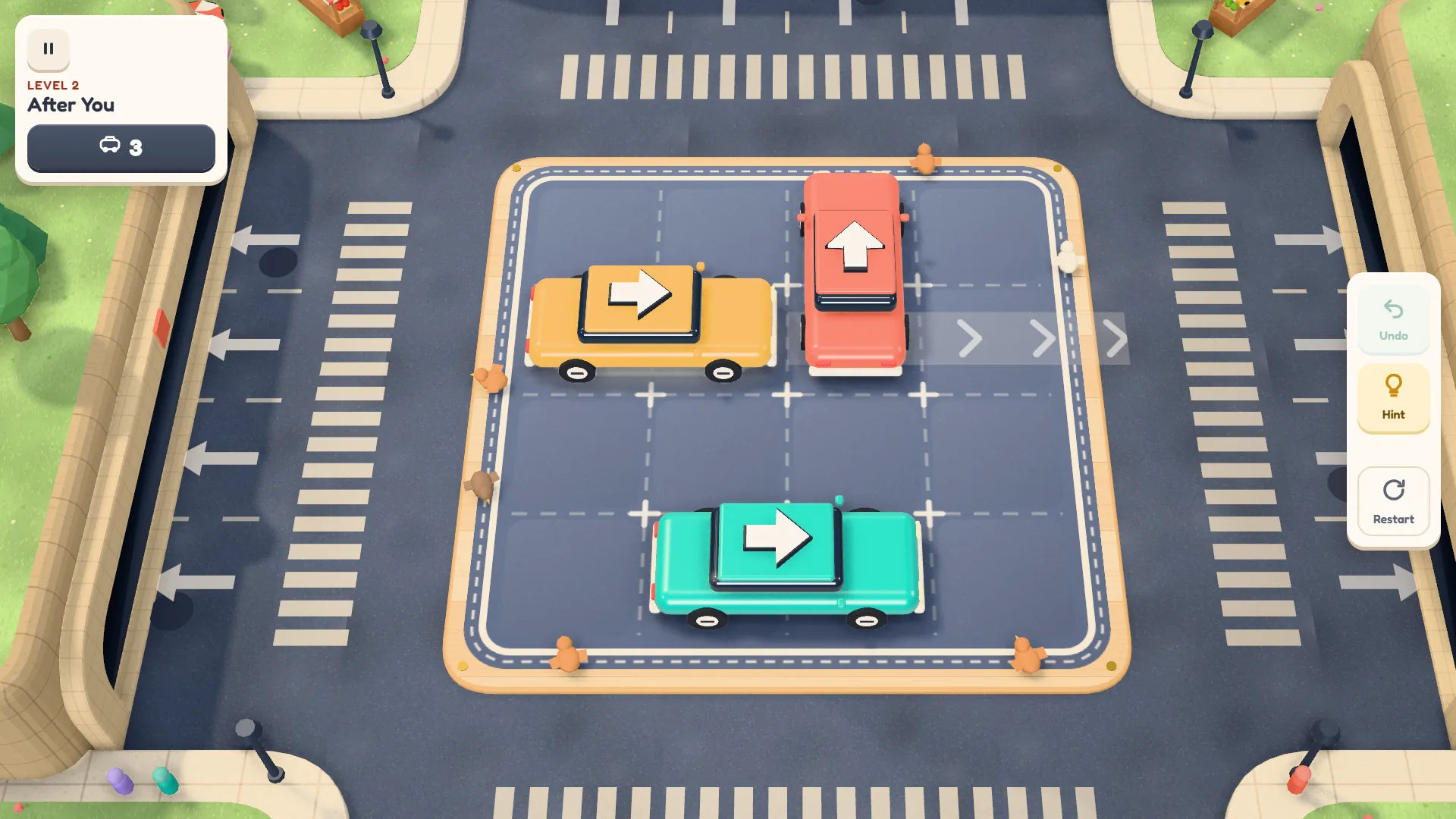
PolarzinhoRed car in the way. Yield, little yellow one.
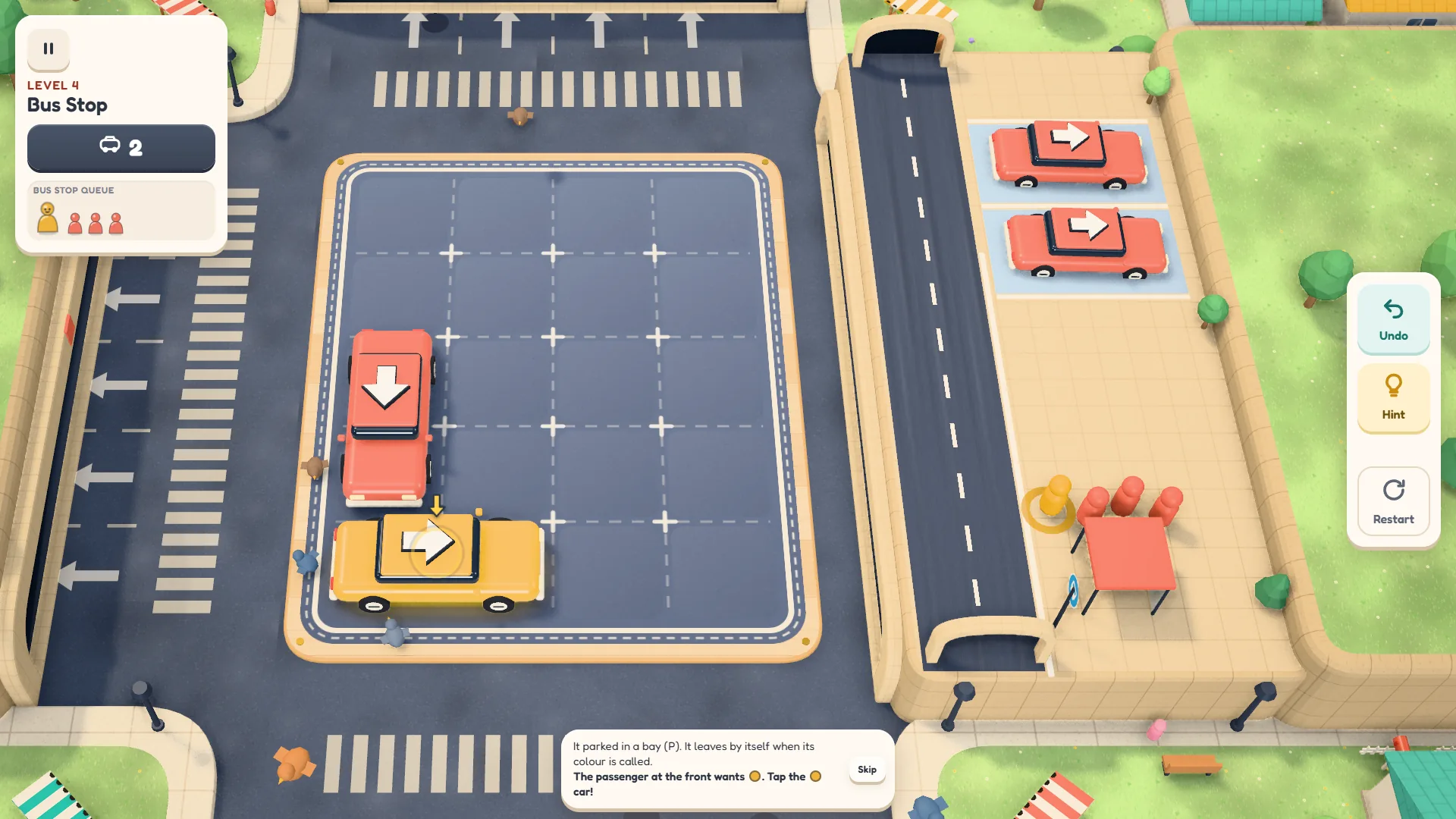
There are parking spaces marked with a P, just like a parking sign.
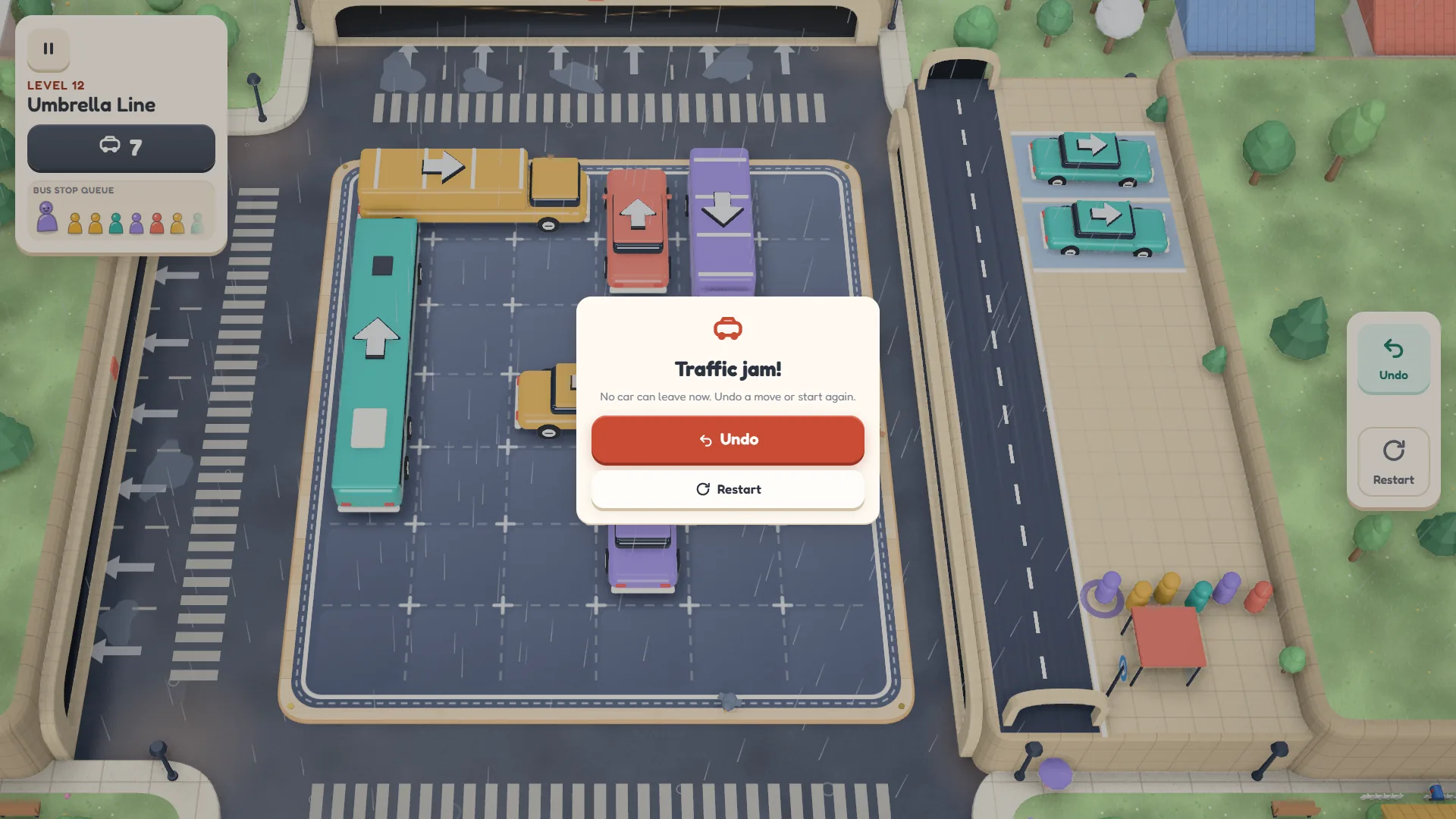
And if you release the cars in the wrong order, you get what every driver knows too well.
FAQ
What are the three main types of traffic signs?
Regulatory, warning and guide signs.
What does a yellow diamond sign mean?
It is a warning sign: there is a hazard or change in the road ahead.
Why is the stop sign an octagon?
So drivers can recognize it by shape alone, even from far away or from behind.
What do orange signs mean?
Road work. Slow down and watch for workers.
Your turn
On your next car or bus ride, count the yellow diamond signs. Then try to say what each one means before you pass it.