
Planets in Order From the Sun, With Fun Facts
The 8 planets in order from the Sun, a trick to remember them, rocky planets and giants, biggest to smallest, what happened to Pluto and one fun fact about each planet.
 By Polarzinho ·
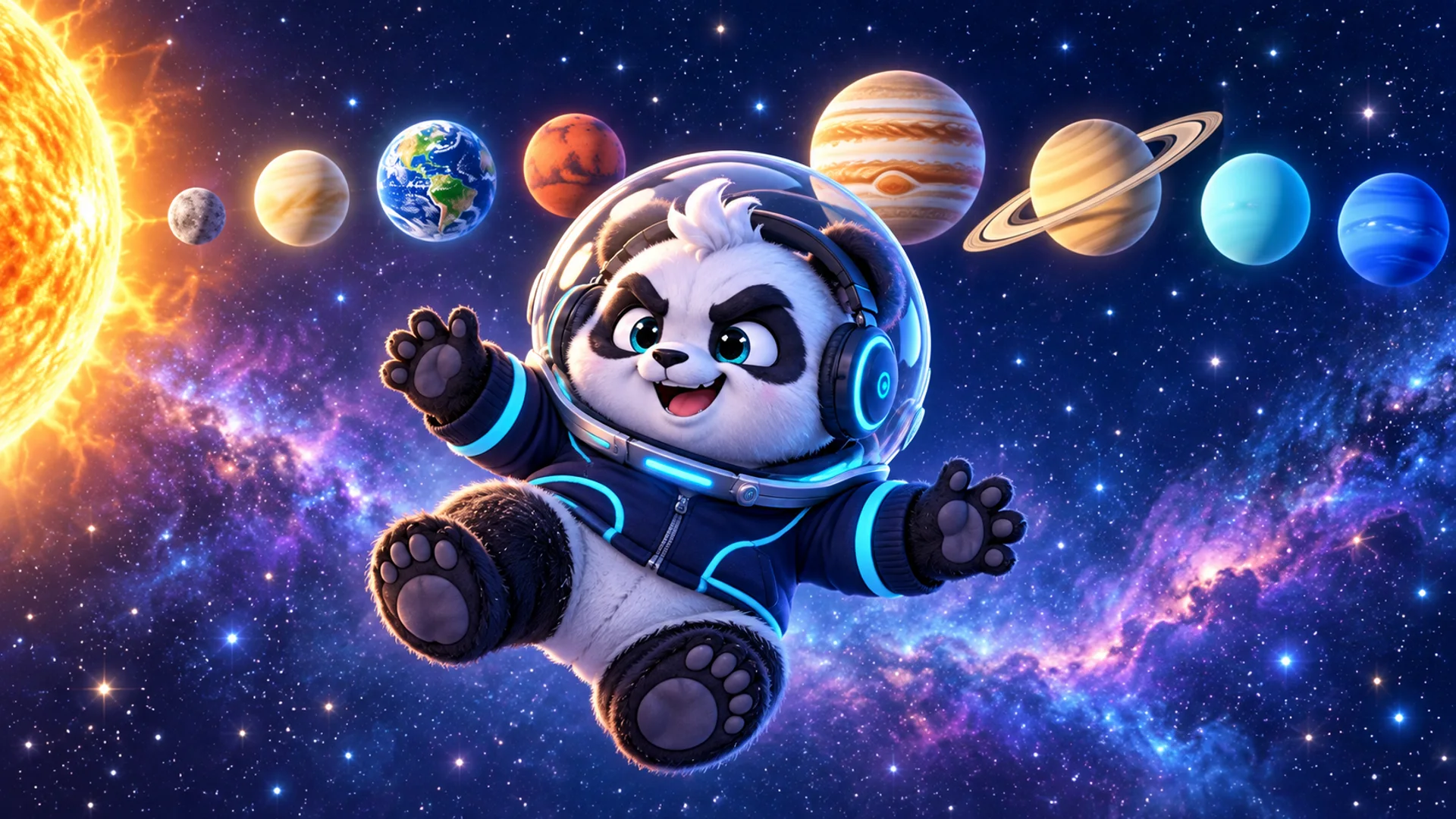
When I look up at the sky, I think: Earth is just one of eight planets spinning around the Sun. And each one has its own weirdness. One spins on its side, one has a day longer than its year, and one would float in a big enough bathtub.
Here you get the planets in order, a trick to remember them, which ones are rocky and which are giants, why Pluto left the list and one fun fact about each.
The 8 planets in order
From closest to farthest from the Sun:
- Mercury
- Venus
- Earth
- Mars
- Jupiter
- Saturn
- Uranus
- Neptune
Rocky planets and giants
- Rocky (terrestrial): Mercury, Venus, Earth and Mars. Smaller, with solid surfaces.
- Gas giants: Jupiter and Saturn. Made mostly of hydrogen and helium.
- Ice giants: Uranus and Neptune. Lots of water, ammonia and methane ices inside.
Between Mars and Jupiter lies the asteroid belt, full of rocks orbiting the Sun.
Biggest to smallest
- Jupiter
- Saturn
- Uranus
- Neptune
- Earth
- Venus
- Mars
- Mercury
One fun fact about each planet
Mercury
The smallest planet and the closest to the Sun. It goes around the Sun in just 88 days and has no moons.
Venus
The hottest planet, even though it is not the closest: its thick atmosphere traps heat at over 400 °C (750 °F). It spins the opposite way from most planets, and its day is longer than its year.
Earth
The only planet known to have life. It has one moon.
Mars
The red planet, colored by rusty iron in its soil. It has the biggest volcano in the solar system, Olympus Mons, and two small moons: Phobos and Deimos.
Jupiter
The biggest of all. The Great Red Spot is a storm larger than Earth. Its moon Ganymede is the largest moon in the solar system.
Saturn
Famous for its rings of ice and rock. It is so light for its size that it would float in a big enough bathtub. It also has the most known moons.
Uranus
It spins on its side, like a rolling ball. Its blue-green color comes from methane.
Neptune
The farthest planet, with the strongest winds. It was found in 1846 thanks to math, before anyone saw it through a telescope.
What about Pluto?
Pluto was called the ninth planet until 2006. That year, the International Astronomical Union defined what a planet is, and Pluto became a dwarf planet. It shares its region of space with many other objects.
Other dwarf planets: Ceres, Eris, Haumea and Makemake.
The Sun and the distances
- The Sun is a star and holds almost all the mass of the solar system.
- Earth is about 93 million miles (150 million km) from the Sun.
- Sunlight takes about 8 minutes to reach us.
Test yourself in Zabum!
Got it all memorized? Time to prove it. Zabum! is a game show quiz with seven categories, each hosted by an animal. Science and Planet are among them.
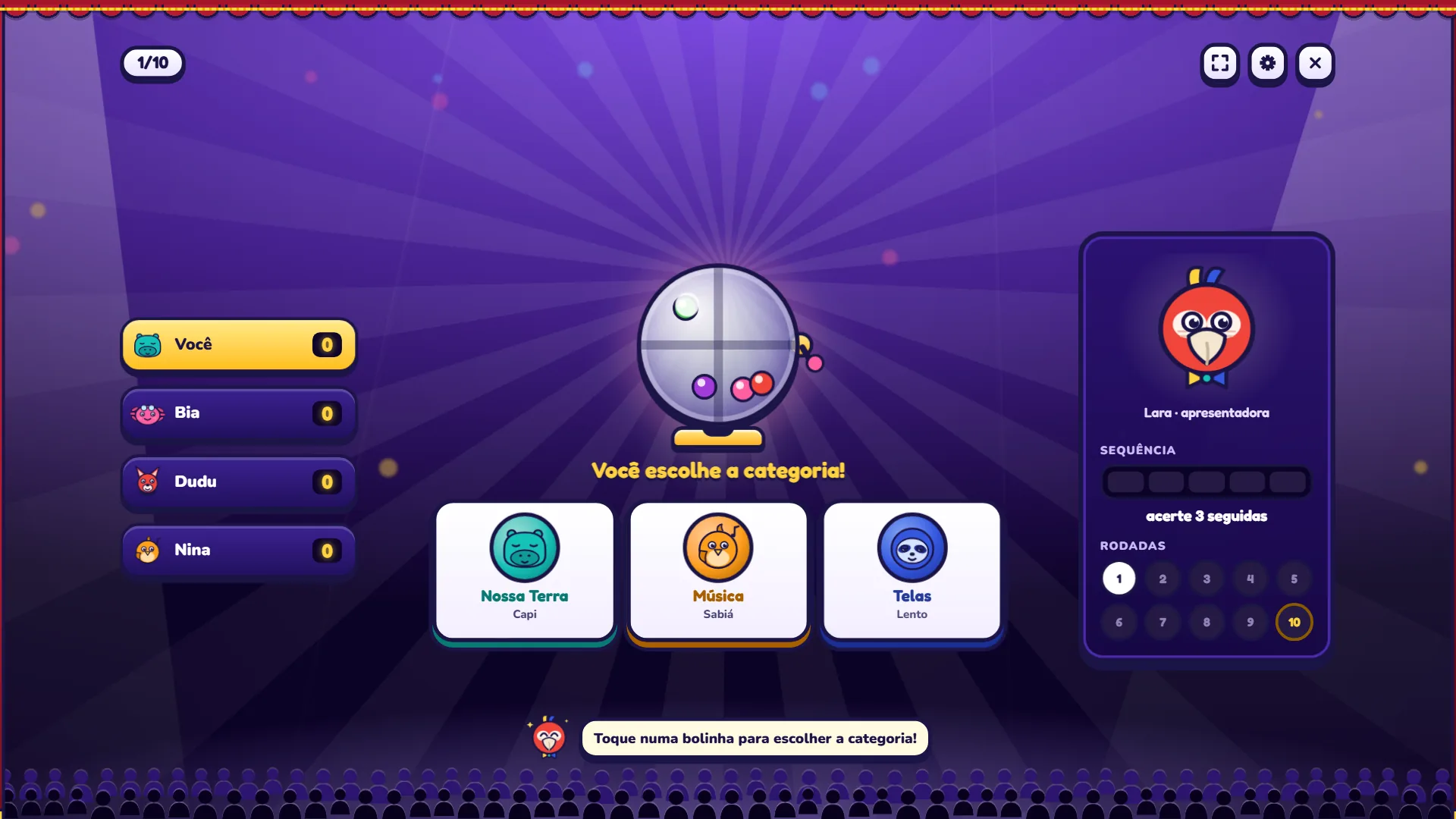
Answer fast for more points, build a streak and watch out for the last question: it is worth double.

PolarzinhoFive for five. Neptune would be proud, if it had Wi-Fi.
FAQ
What are the 8 planets in order?
Mercury, Venus, Earth, Mars, Jupiter, Saturn, Uranus and Neptune.
What is the biggest planet?
Jupiter.
What is the hottest planet?
Venus, because its thick atmosphere traps heat.
Why is Pluto not a planet anymore?
In 2006 it was reclassified as a dwarf planet, because it does not clear the region of space where it orbits.
Your turn
No peeking: which planet comes after Mars? And which one spins on its side? Then make up your own sentence to remember the order.