
Photosynthesis: How It Works and the Equation
What photosynthesis is, where it happens (chloroplasts and chlorophyll), what a plant needs, what it makes, the balanced chemical equation and a bean experiment.
 By Polarzinho ·

I eat bamboo, and bamboo grows because it does photosynthesis. Without it, no fruit, no leaves, no bamboo: almost everything we eat starts with a plant soaking up sunlight.
Here you get what photosynthesis is, where it happens, the ingredients and the products, the chemical equation and an easy bean experiment.
What is photosynthesis?
Photosynthesis is the process plants, algae and some bacteria use to make their own food from sunlight. The word comes from Greek: photo, light, and synthesis, putting together.
Where it happens
It happens mainly in leaves, inside chloroplasts, tiny structures in cells. They contain chlorophyll, the green pigment that captures light. It is why leaves are green.
What a plant needs
- Light: usually from the Sun.
- Water: taken up from the soil by the roots and carried up to the leaves.
- Carbon dioxide (CO2): comes from the air through tiny holes in leaves called stomata.
What a plant makes
- Glucose: a sugar, used as food and energy by the plant.
- Oxygen (O2): the gas we breathe, released into the air by the leaves.
The chemical equation
6 CO2 + 6 H2O + light → C6H12O6 + 6 O2
In words: six molecules of carbon dioxide and six of water, with light energy, become one of glucose and six of oxygen. The count balances: both sides have 6 carbon atoms, 12 hydrogen atoms and 18 oxygen atoms.
Why photosynthesis matters
- It makes the oxygen we breathe.
- It is the base of the food chain: plants are the producers, and animals depend on them, directly or indirectly.
- It removes carbon dioxide from the air.
- A large share of the planet's oxygen comes from algae and ocean phytoplankton.
Photosynthesis and respiration
Cellular respiration is almost the opposite: it uses oxygen to release energy from glucose and gives off carbon dioxide and water. Plants do both: photosynthesis when there is light and respiration all the time.
Experiment: beans with light and without
- Plant two beans in cups with damp cotton.
- Put one cup near a window and the other inside a closed box.
- Water both the same for a week.
- Compare: the one in the light is green and sturdy, and the one in the dark is pale and stretched.
The fruits of Plop!
The fruits in Plop! Fruit Merge come from plants that do photosynthesis. In the game, two matching fruits merge into a bigger one, and in the tutorial a blueberry drops onto another.
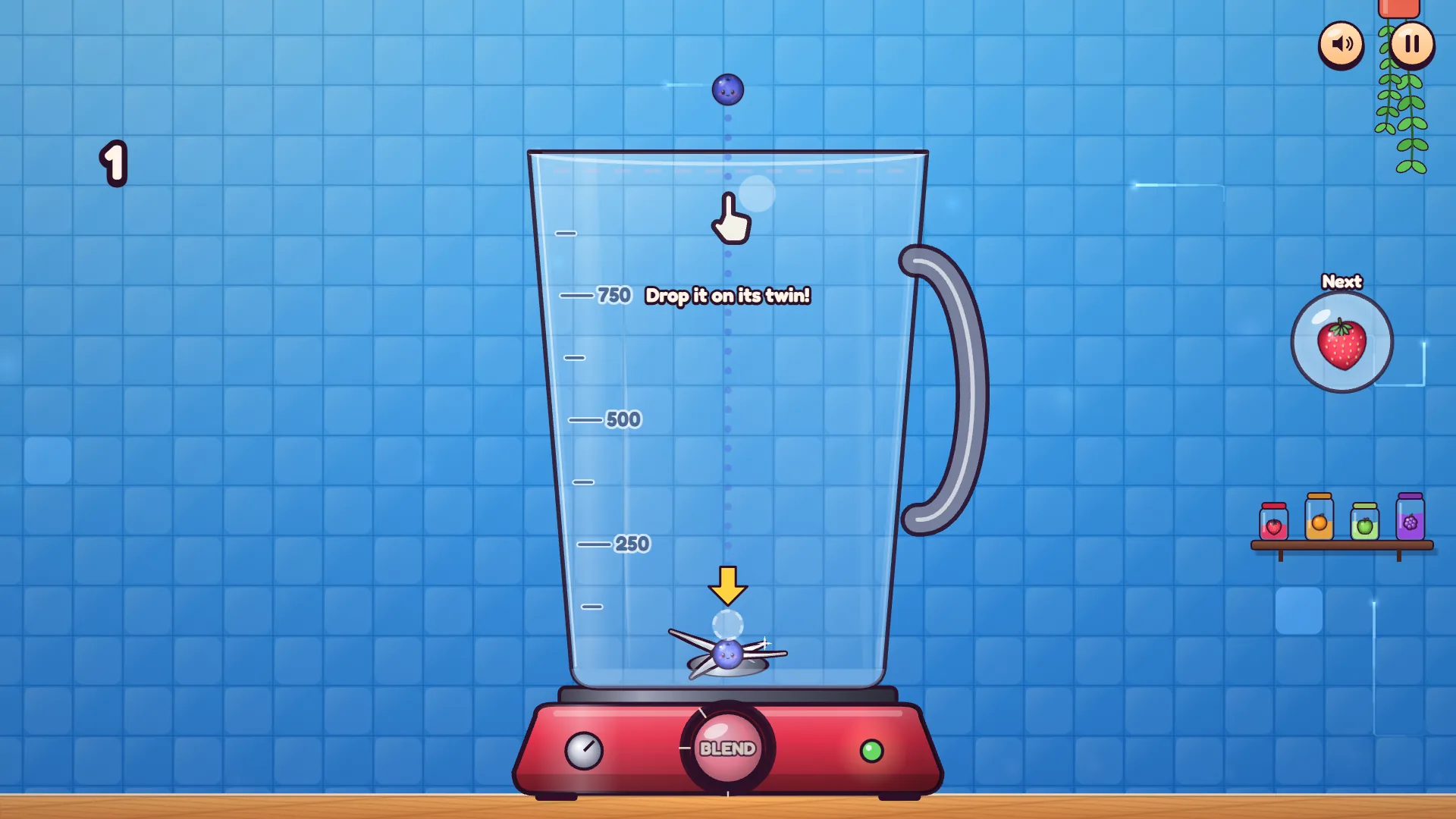

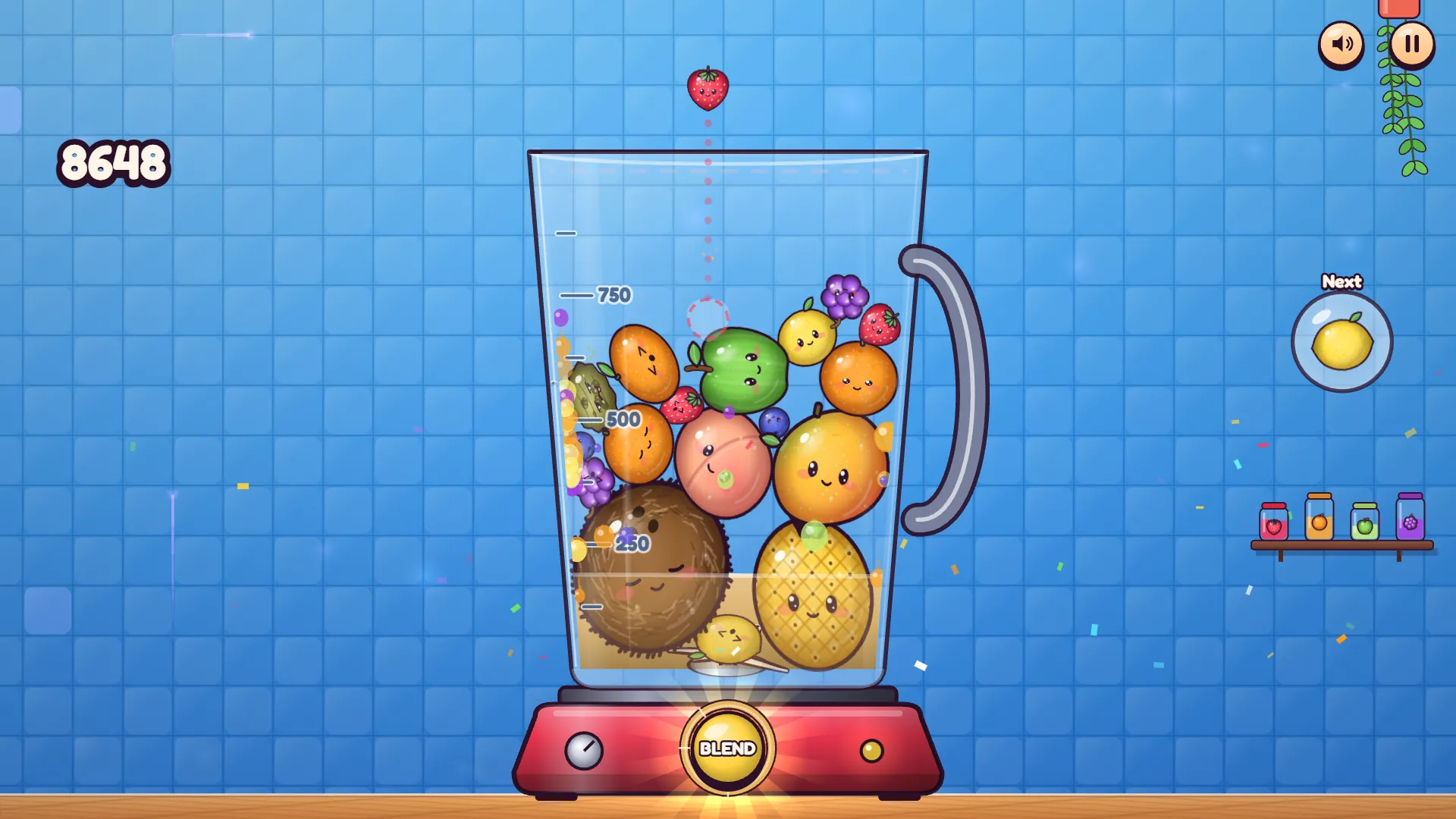
PolarzinhoBlueberry, mango, coconut and pineapple. All of it is sunlight turned into sugar.
FAQ
What is photosynthesis?
The process in which plants use light, water and carbon dioxide to make glucose and oxygen.
What is the equation for photosynthesis?
6 CO2 + 6 H2O + light → C6H12O6 + 6 O2.
Where does photosynthesis happen?
In chloroplasts, mainly in leaves.
Why are leaves green?
Because of chlorophyll, the pigment that captures light.
Your turn
Fill in: the plant takes in carbon dioxide and water, uses light and releases ___. Answer: oxygen, and it also makes glucose.