
La Catrina and calaveras literarias, explained
Who La Catrina is, what calaveras literarias are, what Día de los Muertos celebrates and original example poems with English translations.
 By Polarzinho ·
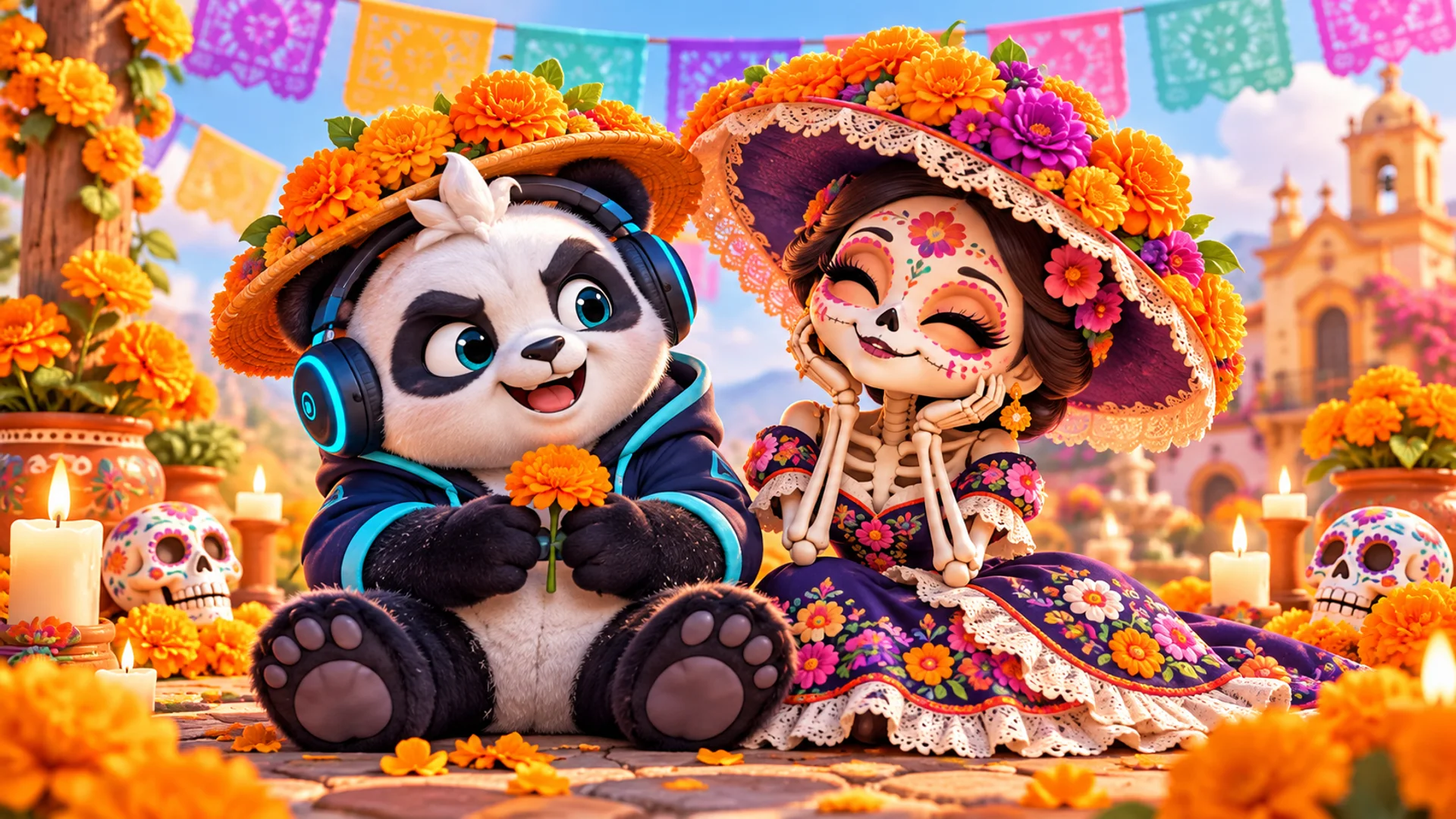
In Mexico, November 1 and 2 are not sad days: they are full of color, food and memories. It is Día de los Muertos, and as a curious panda, I went to learn all about it.
Here is who La Catrina is, what calaveras literarias are, and a few original example poems with English translations.
What is Día de los Muertos?
A Mexican tradition in which families welcome back the souls of loved ones who have died. November 1 remembers children; November 2 remembers adults. UNESCO recognizes it as Intangible Cultural Heritage of Humanity.
- Ofrenda: an altar with photos, favorite foods, candles and flowers
- Cempasúchil: the orange marigold that, by tradition, guides the souls home
- Pan de muerto: a sweet bread made only for the season
- Sugar skulls: colorful skulls with names written on them
- Papel picado: cut-paper banners
Who is La Catrina?
La Catrina is the elegant skeleton in a flower-covered hat who became the symbol of Day of the Dead. She was born as "La Calavera Garbancera", an early 20th-century print by Mexican artist José Guadalupe Posada that mocked people who pretended to belong to the European-style elite. The name Catrina came later, from painter Diego Rivera, who featured her in a famous mural.
What are calaveras literarias?
Short, rhyming, funny poems in which Death (called la Calaca, la Flaca, la Huesuda or la Catrina) comes for someone who is still very much alive. They began in 19th-century Mexican newspapers as satire, and today schools, families and offices write them every November. They are also called calaveritas.
Example calaveras with translations
El gamer
Pepe kept playing without a break; when Death came, he said "one more", and she sat down to play too.
El panda
La Catrina came for a greedy panda; he offered her bamboo, and she forgot all about the cemetery.
La maestra
Death went to the school for teacher Ramona and left with a hundred handwriting drills, because Ramona never lets anyone off.
El impuntual
Death came for Toño, who is always late; she got tired of waiting and went home. Not even Death waits for him.
I wrote these for this post. The Spanish version of the blog has nine.
Write your own
- Pick a person (it can be you) and one of their habits.
- Have Death arrive to take them.
- End with a funny twist: their habit saves them.
- Rhyme the second line with the fourth.
To practice quick vocabulary, Stop! is perfect: every round asks for fast words with the same letter.

PolarzinhoI wrote a calavera for the otter from Letter River. She answered with another one. I lost.
FAQ
When is Day of the Dead?
November 1 and 2.
Is Day of the Dead the same as Halloween?
No. Halloween is October 31 and has Celtic roots. Día de los Muertos is Mexican and celebrates the memory of loved ones.
Who created La Catrina?
Engraver José Guadalupe Posada, as "La Calavera Garbancera". The name Catrina came from Diego Rivera.
Remember with joy
Day of the Dead teaches us to remember with love and humor. If you want to play with words, Stop! is right below.